
Female writers who fought to bridge gaps in a men’s society in order to get recognized for their literary works. This is the essence and talent of women. Love and passion.
11 Female Writers

Jane Austen (1775 – 1817)

Jane’s novels reflect the world of the rural English nobility of the time, as she herself lived it. Due to the timeless appeal of his entertaining storylines, and the wit and irony of her style, her works have never been discontinued by any publisher since their first publication, and are frequently adapted for theater, film, and television. Jane Austen is now one of the best known and most loved authors in the English-speaking world.
She was an English author who wrote romantic fiction combined with social realism.
Her famous novels include Sense and Sensibility (1811), Pride and Prejudice (1813), Mansfield Park (1814), and Emma (1816).
Jane Austen’s novels are a reflection of her outlook on life. She spent most of her life isolated from certain sectors of society. Her close friends were mainly her family and those of the same social position.
“Give a girl an education and introduce her properly into the world, and ten to one but she has the means of settling well, without further expense to anybody.”
Mary Shelley (1797-1851)
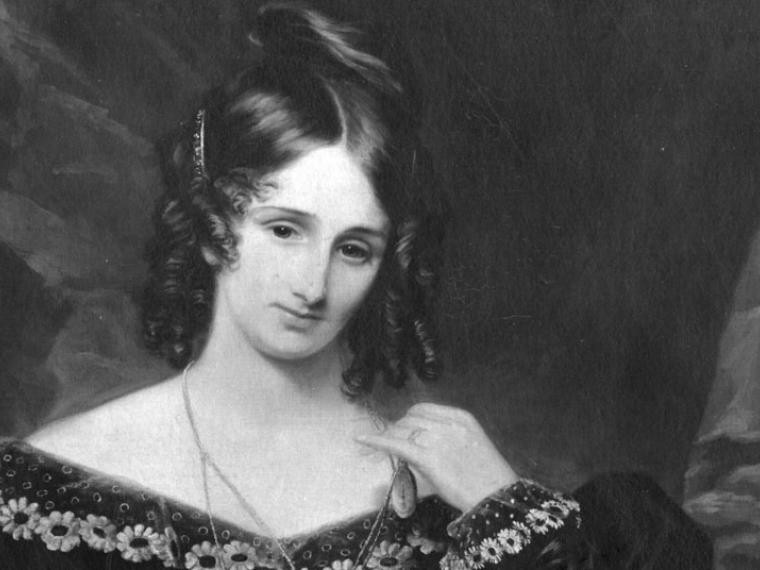
Creator of the book that inaugurated science fiction and that even today stands as one of the great horror stories of all time; in 1818 she published the first and most important of her works, the novel Frankenstein or the modern Prometheus.
Apparently she wrote the story of Victor Frankenstein on a bet. On the night of June 16, 1816, she met Lord Byron and others at a villa on the outskirts of Geneva. Locked in the house by a storm, horror tales were read for entertainment. Mary then imagined Frankenstein inspired by a nightmare she had at eighteen. She wrote the novel after a bet with Byron, as she herself recounted in the prologue to the 1831 edition of “Frankenstein”.
This work, a more than remarkable achievement for an author of only nineteen years, immediately became a critical and public success.
“Dreams were all my own; I accounted for them to nobody; they were my refuge when annoyed – my dearest pleasure when free.”
Emily Dickinson (1830 – 1886)
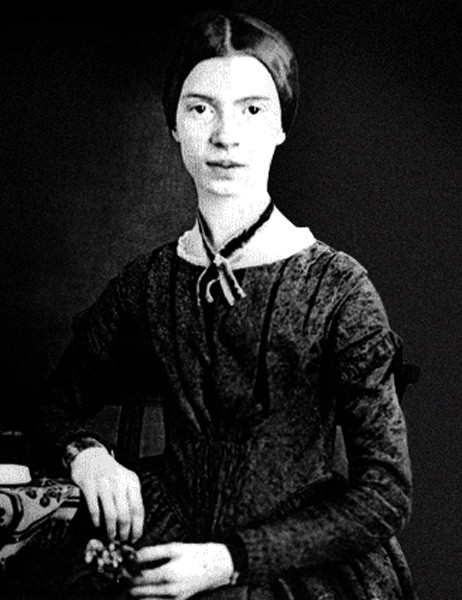
A shy and sensitive woman who spent her entire life sheltered in her room. In that corner is where her art emerged. Dickinson dedicated herself to write about her feelings, thoughts, emotions and passions.
The literary works that she read and which also aroused her interest in poetry were The Bible, William Shakespeare, the poet John Keats, and the Brönte sisters.
From that moment she decided to write original poetry.
She wrote about two thousand poems and about a thousand letters without leaving her home in Amherst. The first literary figure of the time to realize her worth as a poet was the clergyman and writer Thomas Higginson, who advised her not to publish her work as it went against the literary conventions of the time. But her other literary influence, the novelist Helen Jackson, tried to convince her to publish a book of poems.
In life she published only seven poems, but after her death 2,000 poems were found among her papers, some of which were only fragments. From this material, Higginson and Amherst’s friend Mabel Loomis Todd published the first selection of their works, Poems (1890), which was a great popular success.
She varied the effects of the rhyme by also using assonance rhymes. For example: “tune in” to “pain”, a device widely used by poets of the next century.
It uses very simple language, but its complex syntax extracts a rich variety of connotations from common words.
“Hope is the thing with feathers that perches in the soul – and sings the tunes without the words – and never stops at all.”
Virginia Woolf (1882 – 1941)

Virginia Woolf became one of the recurrences of the feminist criticism movement of the 1970s, and since then her works have received attention. Her works have been translated into more than 50 languages.
A large number of books have been dedicated to her life and work, and she also became the subject of many plays, novels, and films.
Considered one of the most important authors of the 20th century.
“Nothing induces me to read a novel except when I have to make money by writing about it. I detest them”
Beatrix Potter (1866 – 1943)

Beatrix Potter wrote and published The Peter Rabbit Short Story (1900), which tells the story of the first of several animal characters that were to become classics around the world.
Inseparable from her stories are her detailed watercolor illustrations that portray her characters.
Concerned about preserving the natural landscape, she bequeathed her Sawrey estate to the National Heritage, which maintains her home as a museum.
“There is something delicious about writing the first words of a story. You never quite know where they’ll take you.”
Agatha Christie (1890 – 1976)

During World War I, she worked as a nurse in a hospital, from where she got the inspiration to write a police story whose victim was poisoned. The novel was The Mysterious Affair of Styles (1920), and with it she inaugurated her career as a writer.
Her stories are characterized by the attractive endings and by the creation of two original detectives: Hercules Poirot and Miss Marple. Poirot is the hero of most of her novels, including The Assassination of Rogelio Ackroyd (1926) and Telón (1975), where the detective’s death occurs.
Agatha was rejected six times in a row before publishing her first novel. Years later she went on to become the best-selling novelist of all time.
“Nothing turns out quite in the way that you thought it would when you are sketching out notes for the first chapter, or walking about muttering to yourself and seeing a story unroll.”
Doris Lessing (1919 – 2013)

At thirteen she dropped out of school and began her self-taught training. In 1937 he started in the world of writing.
She was awarded the 2001 Prince of Asturias Award for Literature in recognition of “one of the most indisputable figures in world literature” and a passionate fight for freedom. Doris Lessing, received the Novel Prize for Literature for her ability to convey the epic of the female experience and narrate the division of civilization with skepticism, passion and visionary force.
Her work of the Golden Notebook is an icon of feminism.
“You should write, first of all, to please yourself. You shouldn’t care a damn about anybody else at all. But writing can’t be a way of life – the important part of writing is living. You have to live in such a way that your writing emerges from it.”
Wislawa Szymborska (1923 – 2012)

Polish poet, considered one of the most unique in her country, who received the Nobel Prize for Literature in 1996.
She studied philology and sociology after World War II at the Jagiellonian University, after which she began her literary career, devoted essentially to poetry, but also to criticism and essays in various periodicals, particularly in Literary Life.
Wislawa Szymborska tends to strip her poetry of rhetorical gravity, for which she resorts to intellectual and emotional distancing through the aforementioned humor present in almost all his books, along with the frequent use of colloquial language, simplicity, short verses and structure. Of classical stanzas.
“The joy of writing. The power of preserving. Revenge of a mortal hand.”
Sylvia Plath (1932 – 1963)

Since she was a child, she was a brilliant person, but also fragile and insecure. Marked by a strict education and by the influence of her father, she always excelled in her studies and published her first poem when she was eight years old.
Her life was a continuous torment that she reflected in her works, especially in poetry, in which nuances are always discovered to catalog despair, question the role imposed on women and seem obsessed by violent emotions and death.
The first title published by Sylvia Plath was the collection of poems “The Colossus and Other Poems” (1960). His main book is his novel ‘The Glass Bell’, autobiographical and signed with the pseudonym Victoria Lucas.
Shortly after the appearance of this book, Sylvia, a poet and novelist of great sensitivity and rich imagination, became a feminist icon by questioning all the norms, usages and customs established for women.
Sylvia Plath is one of the most important poets of the 20th century.
“Poetry, I feel, is a tyrannical discipline. You’ve got to go so far so fast in such a small space; you’ve got to burn away all the peripherals.”
Alice Walker (1943 – Present)

Alice Walker is one of the preeminent writers of African American literature.
In most of her works she portrays the life of black women at the beginning of the 20th century. She obtained a scholarship to study at the University of Atlanta, where she committed herself to the fight for civil rights, a theme that would appear in her work Meridiam (1976). She wrote almost all of his first poems, Once (1968), in a week, after his return from a trip to Africa (1964).
Her poems are characterized by representing themes of love, suicide, human rights and Africa.
Alice won the National Book and Pulitzer Prize for the critically acclaimed novel The Color Purple (1982), which was brought to the big screen directed by Steven Spielberg.
“For me, writing has always come out of living a fairly to-the-bone life, just really being present to a lot of life.”
J.K Rowling (1965 – Present)

Joanne Rowling is a British novelist, screenwriter and film producer who is known around the world for being the author of the young fantasy book series, Harry Potter. The books have sold more than 400 million copies together, making them the best-selling book series in history, making Rowling the richest writer in the world.
“You have to resign yourself to wasting lots of trees before you write anything really good. That’s just how it is. It’s like learning an instrument. You’ve got to be prepared for hitting wrong notes occasionally, or quite a lot. That’s just part of the learning process. And read a lot. Reading a lot really helps. Read anything you can get your hands on”.




One Comment
You really think J.K. Rowling is a female writer that is worth being in an article? She is highly transphobic. Harry Potter was absolutely not inclusive, every character was portrayed in a very stereotypical way. And Rowling keeps attacking transgender and genderqueer people, and she puts herself as a victim.