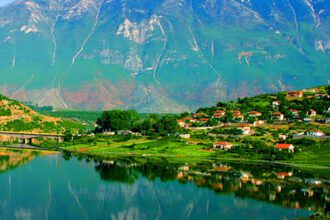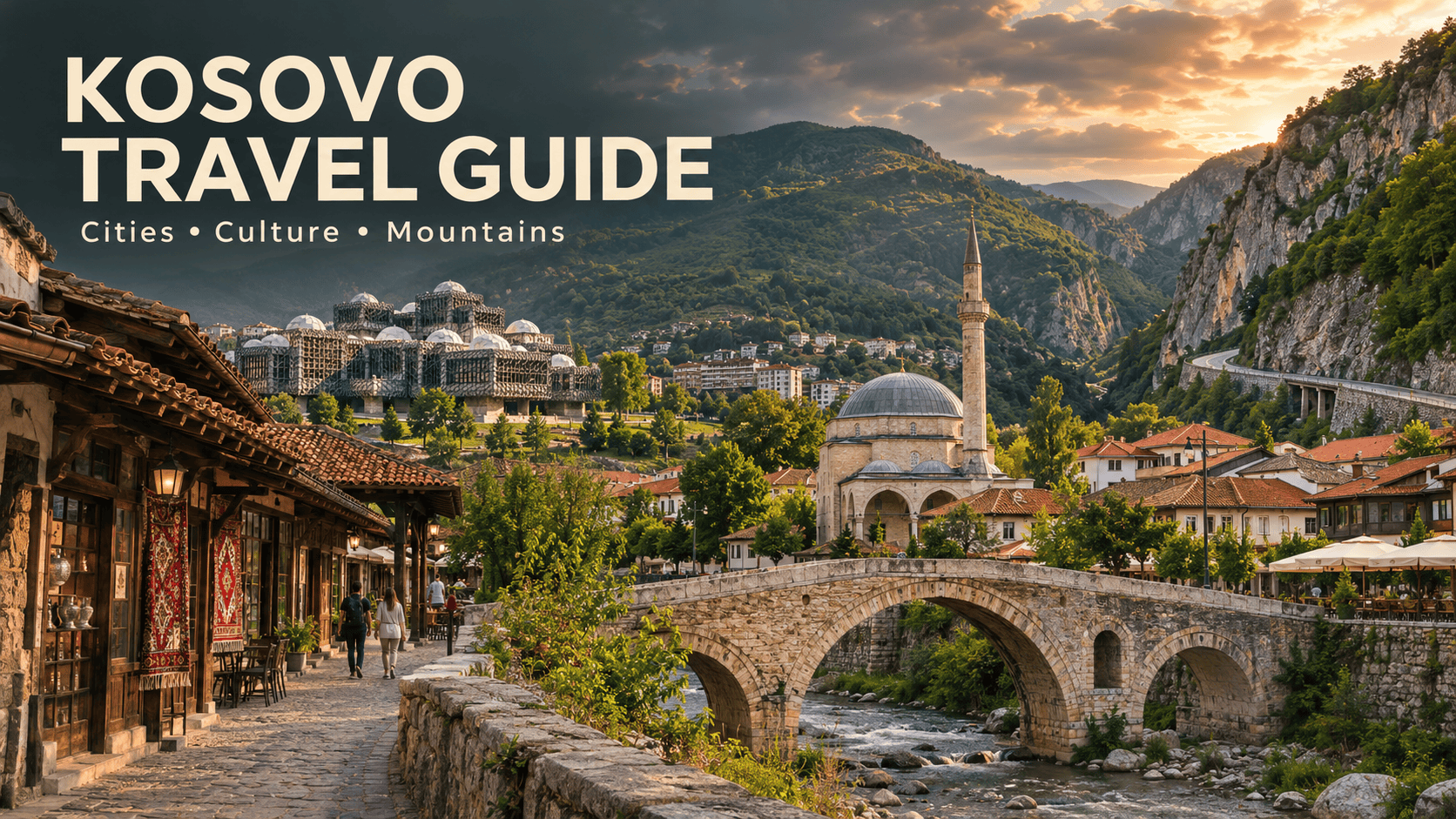
Before travelling through Kosovo, I associated the country with several very different images.
There were the historic streets of Prizren, Pristina’s energetic urban life, the mountains surrounding Peja and Gjakova a city I knew very little about before arriving.
After travelling between these destinations, I realised that Kosovo cannot be understood through a single city.
Prizren feels historic and visually striking. Pristina is younger and more energetic. Gjakova offers a quieter, more local atmosphere, while Peja serves as a gateway to some of Kosovo’s most impressive landscapes.
This Kosovo travel guide covers the best places to visit, how many days you need, a practical 5–7 day itinerary and the essential details to consider before your trip.
Is Kosovo Worth Visiting?
Kosovo is a compact Balkan destination that offers noticeably different experiences within relatively short distances.
You can move from a historic bazaar to a modern capital and continue towards dramatic mountain landscapes without spending entire days in transit.
The country is particularly suitable for travellers interested in history, local culture, Ottoman architecture, café life and outdoor experiences.
Its appeal does not come only from famous attractions. Kosovo is also a place where observing everyday life becomes part of the journey.
The relatively short distances between its cities make it possible to experience several sides of the country in less than a week.
Best Places to Visit in Kosovo
Prizren
Prizren is one of the best places to begin a first trip to Kosovo.
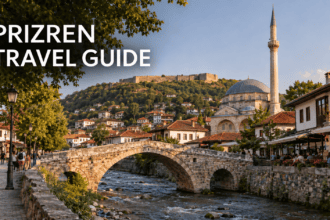
The Stone Bridge, Shadervan Square, Sinan Pasha Mosque and Prizren Fortress are all located within walking distance of one another.
Because the centre is compact, you can see the principal landmarks in a day. However, Prizren is more enjoyable when you do not treat it simply as a sightseeing checklist.
Its atmosphere becomes particularly appealing in the evening. The cafés around Shadervan fill up, local families and travellers gather in the centre, and the historic streets become part of the city’s social life.
Walk up to Prizren Fortress before sunset for a panoramic view over the city. The climb is relatively steep, but the view makes it worthwhile.
I recommend spending at least two nights in Prizren.
Gjakova
Gjakova was one of the places I knew the least about before travelling through Kosovo. It became one of the easiest cities in which to slow down and observe local life.
Its main attraction is the Grand Bazaar, known locally as Çarshia e Madhe.
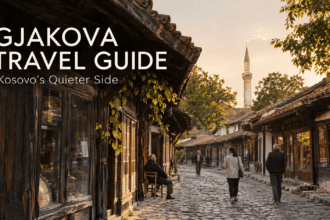
The historic district is characterised by cobbled streets, low wooden shopfronts, cafés and a long tradition of craftsmanship. Unlike a historic quarter created only for visitors, the bazaar remains connected to everyday city life.
The Hadum Mosque stands near the heart of this area and played an important role in the development of the surrounding neighbourhood and commercial centre.
Gjakova does not offer an exhausting list of attractions. Its value comes from walking through the bazaar, drinking coffee and experiencing a quieter side of Kosovo.
One full day or an overnight stay will be enough for most visitors.
For a more detailed look at the city, read our complete Gjakova Travel Guide.
Peja and Rugova Valley
Peja is the most practical base for travellers who want to combine urban exploration with nature.
The city serves as a gateway to Rugova Valley and the surrounding mountain region. Rugged cliffs, mountain roads, hiking opportunities and small villages make this part of Kosovo feel completely different from Pristina or Prizren.
If nature is an important part of your journey, do not treat Peja as a short stop. Spend at least two nights in the area.
Use one day for Peja and another for Rugova Valley. Travellers planning longer hikes may need additional time.
Weather conditions in the mountains can change quickly, particularly outside summer. Check the latest forecast and transport situation before leaving the city.
Pristina
Pristina is Kosovo’s capital and has a younger, more energetic character than the country’s historic cities.
The Newborn Monument, National Library of Kosovo, Mother Teresa Square and the city’s café culture are among the main parts of the Pristina experience.
The capital should not necessarily be judged according to the visual standards of a classical European city.
Its appeal lies in its people, social energy, contemporary culture and the visible contrasts between recent history and future ambitions.
Pristina is also a practical final stop because of its transport connections and international airport.
One or two nights will be enough for most visitors.
A Five-Day Kosovo Itinerary
If your time is limited, use the following route:
Days 1–2: Prizren
Spend your first day around Shadervan Square, the Stone Bridge and Sinan Pasha Mosque.
On the second day, explore the quieter streets of the historic centre and walk up to Prizren Fortress before sunset.
Day 3: Gjakova
Travel to Gjakova in the morning.
Walk through the Grand Bazaar, visit the Hadum Mosque and spend some time in the cafés around the historic centre.
You can stay overnight in Gjakova or continue to Peja later in the day.
Day 4: Peja and Rugova Valley
Explore central Peja before heading towards Rugova Valley.
If hiking and nature are priorities, add another night to this section of the journey.
Day 5: Pristina
Use your final day for Pristina’s central streets, architecture, museums and café culture.
If your flight leaves early the following morning, staying in the capital on the final night will make the journey easier.
A Seven-Day Kosovo Itinerary
For a more balanced trip, divide your nights as follows:
- Prizren: two nights
- Gjakova: one night
- Peja: two nights
- Pristina: two nights
This route allows you to experience Kosovo’s cities and mountain region without changing accommodation every day.
A logical travel order is:
Prizren → Gjakova → Peja → Pristina
If you prefer slower travel or plan to hike in Rugova, extend the trip to eight or nine days.
The Best Time to Visit Kosovo
Spring and autumn are generally the most comfortable periods for travelling through Kosovo.
From April to June, the weather is often suitable for city exploration and outdoor activities. September and October usually bring milder temperatures and fewer summer visitors.
July and August can be hot in the cities, although festivals and cultural events make this a livelier period.
Winter travel is possible, but snow and mountain conditions around Peja and Rugova require more careful planning.
The best time ultimately depends on your priorities:
- Choose spring for greenery and hiking.
- Choose summer for festivals and a more active atmosphere.
- Choose autumn for comfortable city travel and fewer crowds.
- Choose winter for mountain scenery and seasonal experiences.
Kosovo Entry Requirements
Entry and visa requirements depend on your nationality.
Visitors should carry a valid passport or accepted travel document and meet any applicable visa requirements.
Foreign visitors may also be required to register their accommodation address after arriving. Hotels usually complete this process for their guests, but it is worth confirming with your accommodation.
Immigration regulations can change. Always check the latest information from Kosovo’s authorities or the relevant embassy before travelling.
Important Information About Travelling to Serbia
The order of your border crossings matters if you plan to combine Kosovo and Serbia in the same journey.
Travellers attempting to enter Serbia directly from Kosovo may experience problems if they do not already have a valid Serbian entry record obtained through an official Serbian border crossing or airport.
For this reason, do not plan the Kosovo–Serbia section of your journey without checking the latest official border requirements.
Depending on your route, it may be easier to leave Kosovo through North Macedonia, Montenegro or Albania before entering Serbia through another recognised crossing.
Border policies can change, so verify the rules immediately before departure.
Currency and Payments in Kosovo
Kosovo uses the euro, despite not being a member of the European Union or the eurozone.
Cards are accepted at many hotels, restaurants and larger businesses. However, cash remains useful for buses, small cafés, traditional shops and local services.
ATMs are widely available in the main cities. Check your bank’s international withdrawal fees and any additional charges displayed by the ATM before confirming a transaction.
Keeping a small amount of cash is particularly useful when travelling between cities.
Getting Around Kosovo
Buses and minibuses provide much of the public transport between Kosovo’s main destinations.
Distances between Pristina, Prizren, Gjakova and Peja are relatively short, but departure information may not always be accurately displayed online.
Confirm the latest schedule at the bus station, through your accommodation or with a local tourism office.
You usually do not need to book local intercity buses far in advance. Arriving at the station early is still advisable, particularly during weekends and busy travel periods.
Within the cities, most central attractions can be explored on foot.
Taxis are useful for reaching locations outside the centre, but agree on the price in advance if the vehicle does not use a meter.
Where to Stay in Kosovo
Location is one of the most important factors when choosing accommodation.
Consider staying near:
- Shadervan and the historic centre in Prizren
- The Grand Bazaar in Gjakova
- Central Peja or an area with convenient access to Rugova
- Mother Teresa Square and central Pristina
During my journey, I experienced several types of accommodation, including Gjakova Premium Apartments, Sharri Ecotour and Mercure Prishtina.
Apartment-style accommodation can provide additional space and flexibility during a longer journey. Central hotels are often more convenient for short stays, early departures and transport connections.
Compare current hotels and apartments in Kosovo.
What to Eat in Kosovo
Kosovo’s cuisine reflects Albanian, Balkan and Ottoman influences.
Foods worth trying include:
- Flija
- Burek and other filled pastries
- Grilled meat
- Local sausage
- Regional cheeses
- Kajmak
- Traditional desserts
- Turkish-style and regional coffee
Family-run restaurants outside the most tourist-focused streets can provide a more local experience.
Do not try to plan every meal in advance. Some of the most memorable places may be simple bakeries, small restaurants or busy cafés recommended by local residents.
Is Kosovo Expensive?
Kosovo can feel relatively affordable compared with many Western European destinations.
However, your total cost will depend on the season, accommodation standard, taxi use and the number of organised activities you choose.
Calculate the following expenses separately:
- Intercity buses
- Accommodation
- Daily food and coffee
- Transport outside city centres
- Mountain activities
- Guided tours
- Travel insurance
Instead of relying entirely on fixed daily-budget estimates, compare current accommodation and activity prices for your travel dates.
Is Kosovo Safe?
The main tourist cities generally require the same standard precautions you would use elsewhere.
Protect your valuables, plan late-night transport and confirm taxi prices when a meter is not available.
Political tensions and occasional security incidents have affected parts of northern Kosovo. Travellers planning to visit the north should review the latest official travel guidance before departure.
Conditions around border crossings may also change, so leave additional time for international journeys.
My Experience Travelling Through Kosovo
What stayed with me most was how different the cities felt despite being relatively close to one another.
Travelling from Prizren’s historic streets to Gjakova’s quiet bazaar, Peja’s mountain surroundings and Pristina’s energetic centre revealed several layers of the country.
Kosovo makes more sense as a short multi-city journey than as a weekend visit to a single destination.
For a first trip, I would begin in Prizren, continue through Gjakova and Peja, and finish in Pristina.
This route combines history, everyday city life, nature and contemporary culture without requiring long travel days.
Plan Your Kosovo Trip
Start by comparing accommodation in each city:
Find hotels and apartments in Kosovo.
For guided tours, cultural experiences and outdoor activities:
Browse Kosovo activities on GetYourGuide.
Continue planning your journey with:
- Gjakova Travel Guide
- Prizren Travel Guide
- Peja and Rugova Valley Guide
- Pristina Travel Guide
- Five-Day Kosovo Itinerary