Gjakova was one of the places I knew the least about before travelling through Kosovo.
Pristina is usually presented as the country’s modern capital, while Prizren attracts visitors with its historic architecture and mountain views. Gjakova often appears simply as a stop between better-known destinations.
After spending two nights in the city, however, I realised that Gjakova deserves more than a quick visit.
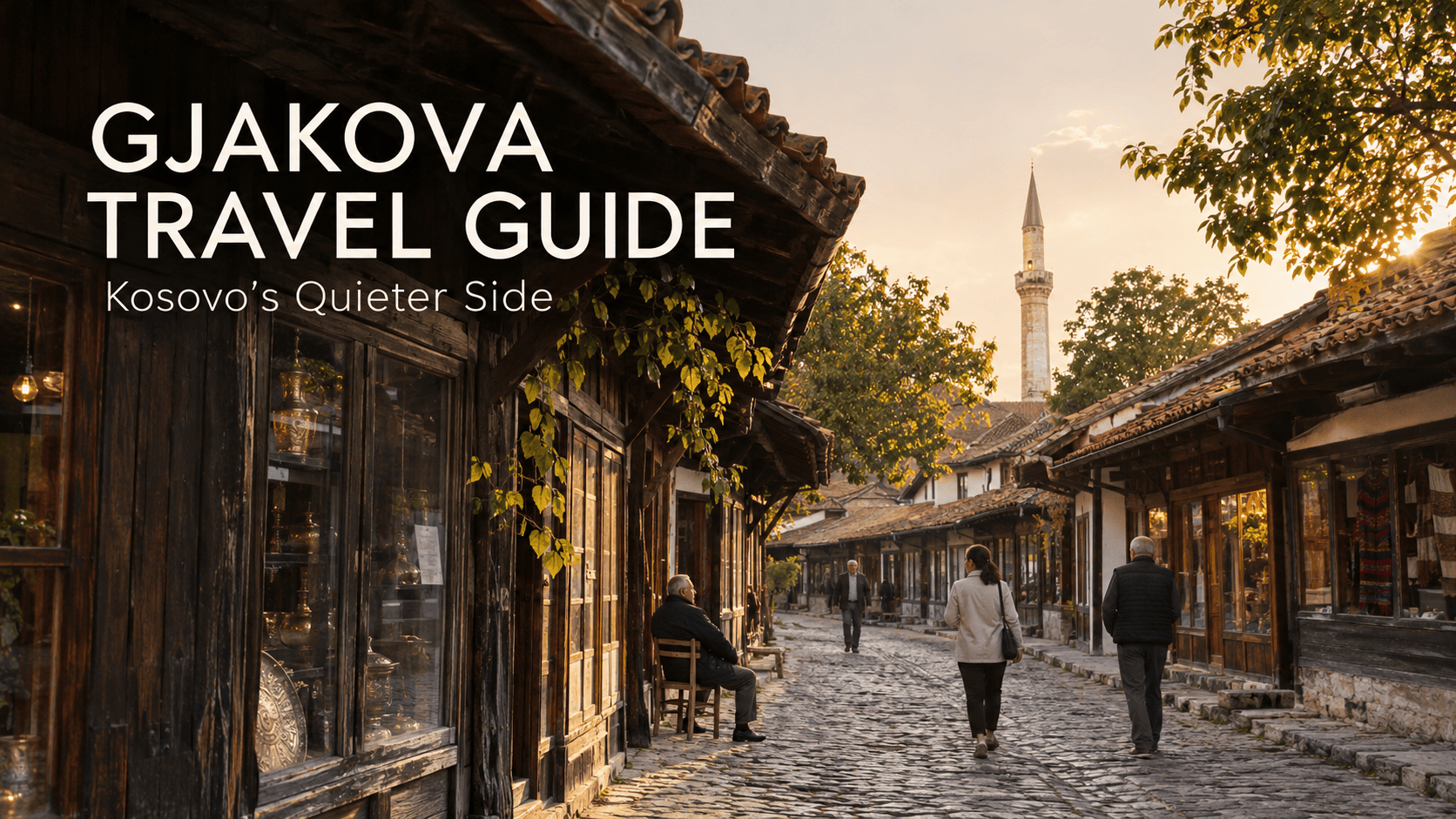
This is not a city filled with major tourist attractions or an exhausting list of places to tick off. Its appeal comes from somewhere quieter: the cobbled streets of its historic bazaar, small cafés, traditional architecture and the rhythm of everyday life.
If you want to understand Kosovo beyond its most photographed landmarks, Gjakova is worth adding to your itinerary.
What Is Gjakova Like?
Gjakova is located in western Kosovo and fits naturally into a route connecting Prizren, Peja and Pristina.
The centre is compact enough to explore on foot. The historic bazaar, old religious buildings, cafés and local restaurants are concentrated within a relatively small area.
The city’s modern identity began to develop during the Ottoman period. One of its oldest neighbourhoods grew around the Hadum Mosque, while Gjakova’s position on historic trading routes helped it become an important regional commercial centre.
What makes Gjakova interesting today is that its historic centre has not become a lifeless tourist display.
The bazaar remains part of the city’s daily routine. People meet, drink coffee, eat and shop in the same area visitors come to explore.
Best Things to Do in Gjakova
1. Walk Through the Grand Bazaar
The first place to visit in Gjakova is the Grand Bazaar, known locally as Çarshia e Madhe.
Stretching for approximately one kilometre, its cobbled lanes are lined with low wooden shopfronts, cafés, restaurants and workshops. It is widely considered one of Kosovo’s oldest and longest historic bazaars.
The bazaar was severely damaged during the 1999 war and later reconstructed shop by shop.
Do not rush through it.
Walk along the main street, explore the smaller side lanes and pay attention to the wooden façades and traditional details. During the day, the bazaar feels like a historic commercial district. In the evening, its cafés and restaurants create a more social atmosphere.
The best way to experience it is not simply to take photographs and leave. Find a table, order a coffee and spend some time observing the city.
2. Visit the Hadum Mosque
Located near the heart of the bazaar, the Hadum Mosque is one of Gjakova’s most significant historic monuments.
It was constructed in 1594–1595 by Hadum Suleiman Efendi. The wider complex also includes a religious school, an ablution area, old graves and one of Kosovo’s historic libraries.
The mosque played an important role in the development of the surrounding neighbourhood and commercial centre.
When visiting, pay attention not only to the building itself but also to its relationship with the bazaar. Together, they reveal how trade, religion and community life shaped the historic city.
As this remains an active place of worship, visitors should dress respectfully and avoid disturbing prayer times.
3. See Hani i Haraçisë
Gjakova’s old inns offer another glimpse into its trading history.
Hani i Haraçisë reflects a period when merchants travelling through the region needed places to rest, eat and store their goods.
Today, the area provides a pleasant setting for experiencing local food and the atmosphere of the historic centre.
It also reminds visitors that Gjakova was not simply a local settlement. The city developed as part of a much wider regional network of traders, craftsmen and travellers.
4. Visit the Ethnographic Museum
The Ethnographic Museum is worth considering if you are interested in traditional Kosovar homes, clothing and everyday culture.
It provides useful context for the architecture and craft traditions visible around the bazaar.
Small museums like this can help visitors understand Balkan cities beyond their squares and monuments. Opening times may change, so check the current schedule before visiting.
5. Walk Along the Krena River
Gjakova is best explored through slow walks rather than a packed sightseeing schedule.
The area around the Krena River offers an opportunity to leave the historic centre and observe a more ordinary side of the city.
Do not expect a major tourist attraction. The value of this walk lies in seeing how the city functions beyond its historic landmarks.
6. Discover Gjakova’s Historic Bridges
Several historic bridges can be found in and around the wider Gjakova region, including the Tailors’ Bridge, Tabak Bridge and Fshajt Bridge.
These structures reflect the trade routes that once connected Gjakova with surrounding settlements.
Some bridges are outside the central area, so plan your transportation before visiting. If you only have a few hours in the city, prioritise the Grand Bazaar and its immediate surroundings.
How Many Days Do You Need in Gjakova?
One full day is enough to see Gjakova’s main central attractions.
However, staying for one or two nights allows you to explore without rushing, experience the bazaar in the evening and include nearby places in your itinerary.
I spent two nights in Gjakova. This gave me enough time to explore the centre while also slowing down after moving frequently between different Balkan cities.
Travellers with limited time can visit Gjakova as a stop between Prizren and Peja. If you are taking a longer trip through Kosovo, staying overnight creates a more balanced itinerary.
Where to Stay in Gjakova
When choosing accommodation in Gjakova, look for somewhere within walking distance of the Grand Bazaar and the city centre.
During my visit, I stayed at Gjakova Premium Apartments. Apartment-style accommodation can be particularly convenient for travellers who are taking a longer journey and want more space than a standard hotel room.
Although Gjakova is relatively compact, staying too far from the centre may create an unnecessary need for taxis, especially in the evening.
For this reason, consider both the nightly price and the location before booking.
Check current accommodation options in Gjakova.
How to Get to Gjakova
Gjakova has road connections with Prizren, Pristina and Peja.
One of the most practical ways to include the city in a Kosovo itinerary is:
Prizren → Gjakova → Peja → Pristina
Gjakova works particularly well as a stop between Prizren and Peja.
Bus schedules and routes may change, so confirm the latest departure information with your accommodation or at the local bus station before travelling.
Once you arrive in central Gjakova, most of the main sights can be reached on foot.
Gjakova or Prizren?
If you have time for only one historic city during your first trip to Kosovo, Prizren is likely to be the stronger choice.
Prizren has a larger concentration of recognised landmarks and more developed tourist infrastructure.
Gjakova, on the other hand, feels quieter, less touristic and better suited to travellers who want to observe local life.
In short:
- Choose Prizren for a busier sightseeing programme and major historic landmarks.
- Choose Gjakova for a slower atmosphere and a more local experience.
- Visit both if you want to see two different sides of Kosovo.
The cities are not direct alternatives. They complement one another and can easily be included in the same itinerary.
Is Gjakova Worth Visiting?
Gjakova may not appeal to travellers who only want famous attractions and packed itineraries.
There are no enormous museums or endless lists of monuments here. Its value lies in its bazaar culture, architecture and everyday atmosphere.
For me, the best part of visiting Gjakova was not having to move constantly from one attraction to another.
Walking through the Grand Bazaar, stopping for coffee and observing life around the old streets was enough to understand the city.
Some places impress you with the number of things they offer.
Others stay with you because of how they make you slow down.
Gjakova belonged to the second group.
One-Day Gjakova Itinerary
Morning
- Walk through the Grand Bazaar
- Visit the Hadum Mosque
- Explore the historic inn area
- Stop for coffee inside the bazaar
Afternoon
- Have lunch at a local restaurant
- Visit the Ethnographic Museum
- Walk around the Krena River
- Explore the surrounding streets
Evening
Return to the Grand Bazaar for dinner and experience its evening atmosphere.
Two-Day Gjakova Itinerary
Use your first day to explore the historic centre.
On the second day, visit one of the historic bridges, continue towards Peja or spend more time experiencing the city without a strict schedule.
This slower approach is particularly suitable if Gjakova is part of a longer journey through Kosovo.
Final Thoughts
Gjakova may not be Kosovo’s most frequently discussed destination. That is partly what makes it interesting.
The city does not present visitors with an overwhelming list of attractions. Instead, it offers space to walk, observe and experience a quieter side of Kosovo.
If you are travelling between Prizren, Peja and Pristina, do not treat Gjakova simply as a place to change buses.
Give it several hours—or preferably one night.
Sometimes the places that reveal the most about a country are not the ones promoted the loudest.
Plan Your Kosovo Route
If you are unsure how to connect Gjakova, Prizren, Peja and Pristina, Mozart Cultures’ RotaBot can create a personalised route based on your travel dates, interests, pace and budget.