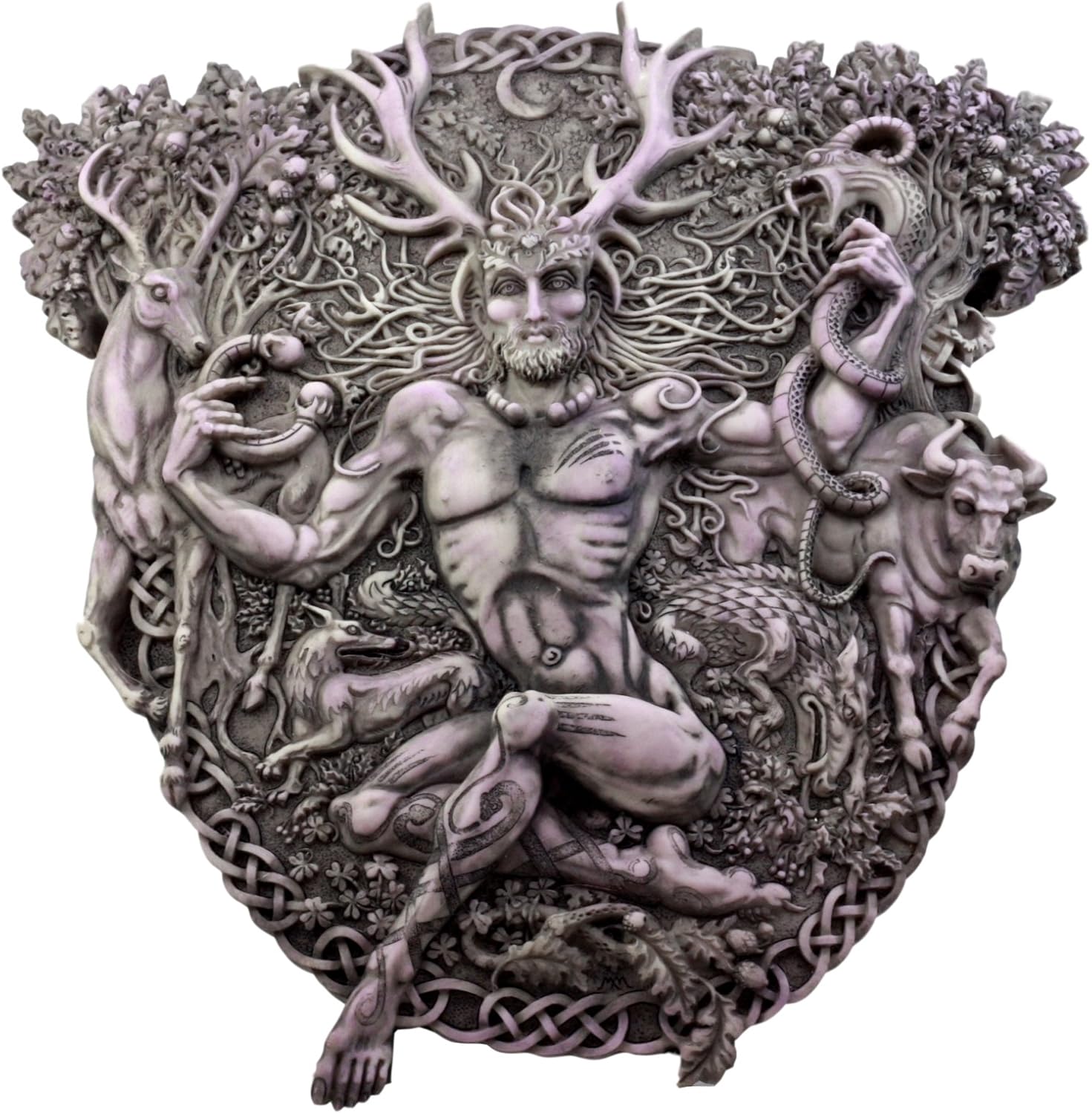
Cult of the Deer
Although the masculine figure that we view in Wicca, who turns into a devil in Abrahamic religions later is called “horned deity” in a way reminiscent of deer, female deer also has a place in many cultures. It’s kind of a symbol of wisdom and it is a pathfinder to humanity. A protective, matronly guiding spirit. This writing won’t include the roots of ‘’evil’’ and gods like Pan, however; I’m planning to continue writing about similarities between mythologies. Therefore, an essay about the ‘’Devil’’ will be written for sure.
Horned God and Mood Goddess
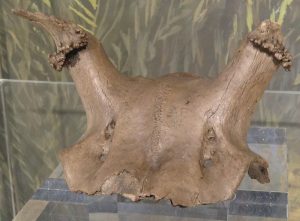
Speaking of the ‘Horned Deity’, let’s start with the duality of the Horned God and the Moon Goddess. The oldest materials that can be connected with the cult of the horned god dates back to 9000 BC. Those materials are twenty-one red deer headdresses, made from the skulls of the red deer and likely fitted with leather laces, found in the Mesolithic site of Star Carr in Yorkshire, England. As well as it has a duality with Goddess, Horned God also has a duality within himself. Having two horns represents this duality and contrast. Two aspects of Horned God and Three aspects of Moon Goddess may be placed on the five points of the pentagram.
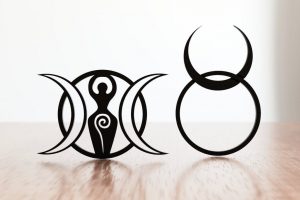
Horned God symbolizes wildlife, hunting, sexuality, and the cycle of life. His ‘equal opposite’, The Moon Goddess, on the other hand, is mentioned as Mother Nature. She is nature and she gives birth to nature. She is the holder of ‘creative energy’. Moon Goddess is being remarked as ‘’Three-faced-goddess’’ a lot. Even her symbol is three forms of Moon together. There is a picture of the symbol below with the horned deity symbol. The first form represents a maiden, young form of the goddess. We often see the maiden as Artemis in Greek Mythology. The full moon is a mother, which is generally Selene and the other form of the Moon is a wise old lady as Hekate. The mysterious goddess of witches. These names are variable but this is likely to be the main construct.
Triple deity is also an abstruse topic; therefore, It’s not this writing’s topic. Hence, going around it cursorily would be appropriate.
Horned God and Moon Goddess united somewhere in time. A couple of goddesses became the symbol of the life cycle, some gods coalesced with nature and some became the symbol of the moon. In the meantime, speaking of horns, Artemis became the goddess of hunting and her symbol became a deer as well. Artemis is a moon goddess and her twin Apollo is a sun god, just like the other twins Selene and Helios. Selene defines the moon itself, unlike Artemis. Anyway, legends mention Artemis as a wise, sublime goddess.
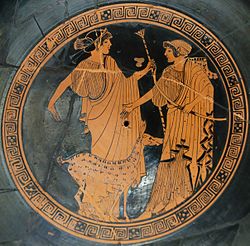

Legend Examples
In one of the legends; Agamemnon kills a deer in the hunt. However, the deer he killed was one of Artemis’s deers. Thus, the supercilious goddess got steamed up and stopped the winds for the Greek fleet who were on the way to the war of Troja. Agamemnon invokes for winds to Artemis, meanwhile, the goddess has one condition: sacrificing of Agamemnon’s daughter. Even though he refused to obey at first, he couldn’t let his whole crew die in the middle of the ocean. Just before he was about to kill her daughter, the goddess’s heart softened when she saw Agamemnon’s daughter laying on the altar with a knife next to her neck and she granted a deer for them to sacrifice…
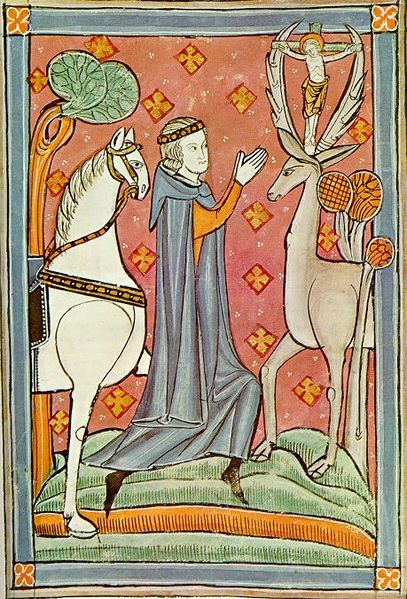
European folklore speaks of a hermit living in the forest and a deer that keeps him alive with its milk. The deer has become a protective animal for them with its meat and milk. In some Christian communities, the deer has been accepted as the symbol of Christ. Around the sixth century, the deer began to appear with the identity of the ‘holy virgin’ and the young girl, reminiscent of Artemis.
To continue with another triple deity, let’s talk about Indian Mythology. There, ‘triple deity’ is not just feminine but both feminine and masculine. Saraswati, Lakshmi, and Parvati. All three forms assist Brahma, Vishnu, and Shiva to create, sustain and reproduce the universe respectively. Brahma is the creator, Vishnu is the protector, and Shiva is the destroyer. Shiva is referred to as the pure one, though he is the representation of annihilation. He is the destroyer of evil, a symbol of beginnings. Saraswati is the goddess of wisdom and learning, and according to legends, she takes the form of a red deer. Here, too, we see the pairing of feminine wisdom and deer.

In Turkish culture, femininity is associated directly with wisdom; In fact, in a creation epic belonging to Altai Turks, Ak-Ana, who came out of the water while God Ülgen was thinking about creating the world, gave Ülgen advice. The legend text says, “This is how God made it, on the command of Ak-Ana”. Legends also mention the daughters of God Ulgen as “White-girls”. This indicates the existence of other Turkish female sea goddesses who are mentioned as “White”. Whiteness is a feature attributed to the goddesses. The word ‘’Ak’’ (White) means heaven in Altai Turks and the gods sitting in heaven are called “Aktu”.

The deer is a sacred animal for the Turks and has a great place in Turkish mythology and tales. On the other hand, there is no record of derivation from deer in an old and original Turkish legend. It is the female deer that takes place in Turkish legends, as in many other mythologies. Just as the white elephant is sacred in India, the white deer was considered sacred by the Turks.

Additionally, there is some kind of a bond between lakes/seas and deers. They often appear with a sort of water mass. To give an example, ‘wolf’ is a symbol of Turks in general and there are some legends with a wolf and a deer crossing the sea together. These legends gave their way to the guiding white deer that led the Turks through the sea, and the subject of crossing the sea became one of the most important motifs of Turkish myths. We see it especially in Altai and Siberian tales and in the origin myths of the Huns and Hungarians. According to their beliefs, there is a sea called White or “Sky Sea” that isolates this side of the world from the other, and there is a great mountain at the end of the world by that sea.
There is also a Turkish myth that is similar to Artemis’ case. According to the legend, one of the ancestors of the Göktürks fell in love with a sea goddess and as the love interest between them continued, the Göktürk khan organized a hunt. While the soldiers were cornering the wild animals, one of them killed a White-deer he saw in the distance with his arrow. The khan, who could not find his lover, understood what happened in the sack and ashes. After that, he decided to punish the soldier who killed the deer and announced that the human sacrifices would be given from his clan after that time.

In Shamanism, there are power animals and although there were more birds, in the beginning, different animals had a place over time. We can see the traces of this totemism in Shaman clothes. For example, three main types of clothing representing the earliest power animals have been found in Central Asia and Siberia; they are bird, deer, and bear. The belief of carrying the spirit of the animal and disguising it in Turkish Shamanism was continued by the Islamic dervishes. Thus, the stories of hunters who injured a deer and saw it turn into a dervish continued to be told.

As we move toward north and west, we can talk about Celts. Because in the Edda poem Grimnismal, the four deer of Yggdrasil are described as feeding on the world tree. The poem also mentions a deer named Eikþyrnir sitting on the top of Valhalla. In one of the epics, Freyr kills Giant Beli with an antler. In another, Sigurd is milked and cared for by a deer before being found by the wise Mimir. It reminds the stories of hermits kept alive by deers from European folklore. There are many such legends in Turkish culture also.
To continue with England and Celts; An Anglo-Saxon royal scepter found at a burial site in England presents a depiction of an upstanding, horned deer. In the Old English language poem, Beowulf, much of the first part of the story takes place in a large banquet hall called Heorot, meaning ‘Deer Hall’. The deer has a great place in Celtic tribes’ culture. Little details somewhere and magnificent deities themselves grounding on the deer cult… As the similarities between different cultures are incredible, these cultures are just as incredible in themselves! Hence, I’m gonna stop writing this to write different articles which are more focused on each culture.