As the world plunged itself into its draconian policies of self-destruction, little did it know the consequences of its actions. The irony of the current scenario is whilst the penchant of humanity rooted for all plausible ways to establish its greatness and relinquish the needs of the others, it eventually got stuck into the squandering of its own intelligence. The year 2020 gave us a taste of our own medicine. During this period, life came to a full circle. From the very start of our humane existence, we have not only plundered and exploited the resources of this planet but also harbored very little to almost no respect for the importance of co-habitancy.

(Bill Gates, 2015 Ted Talk Interview,
Directed by Barbara Anastacio)
Bill Gates, the founder of Microsoft, back in a 2015 TED Talks interview, had already warned the world of a probable apocalypse if it soon did not curb its quest to satiate its quintessential greed for more. According to him, the most dominant demon of the future is not some swanky weapon that can exponentially amp up the level of destruction and havoc but rather a subtle yet most impactful approach.
After the horrors of the 1944 Hiroshima and Nagasaki nuclear bombings, the next dreaded approach of the modern-day war is ‘Bioterrorism’. Introduction of a perfectly engineered virus with a potential to bring the world to a halt and rightly so the year 2020 had the first taste of the darker times ahead.

The coronavirus pandemic proved all of Gate’s apprehension for the future to be correct. It widely exposed the fallibility and the fragility of ‘Globalization’. Post the financial crisis of 2007-2008, the critics of globalization posed certain serious questions to its advocators which had eventually led to the sowing of the first seeds of doubts in terms of reliability of the given system amongst the global audience. The aftermath of the crisis led to the trend of globalization facing its initial wave of receding popularity amongst the international market. It had widely cut open the major drawbacks of the system when companies around the globe were hard hit with the economic situation whose epicenter was the United States of America. The pandemic further accelerated the approach.


The heyday of Globalization saw the world converting itself into a global village with more and more easing out of restrictions on travel across the borders. But the onset of the pandemic forced the world to recede to the mid-20th century era as around 80% of the countries around the globe imposed some sort of travel restrictions. The travel and the aviation industry were some of the worst victims of the pandemic amongst various other notable sectors. Beyond the incurring of losing out trillions of dollars by the travel industry in 2020 alone, the restrictions on the mobility of the masses would have a long-standing impact in the coming years. It has led to a large-scale disruption of business ventures which would eventually exacerbate the existing socio-economic inequalities.

From midnight all flights and passenger ferries from Britain to Ireland will be suspended for an initial period of 48 hours in an effort to stop the spread of a new coronavirus strain to Ireland.
On Sunday, December 20, 2020, in Dublin, Ireland. (Photo by Artur Widak/NurPhoto via Getty Images)
With the cracks wide open, we are in a way visualizing a much more distorted world where one can expect a back and forth of the continued argument of whether or not one should support this relationship of excessive interdependence on one another.
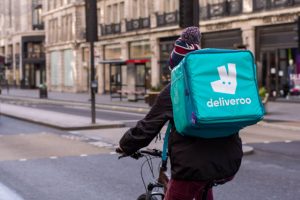
The pandemic made us see the world like never before. During such testing times, innovations and creativity rule the roost of human development. Months of marooned lifestyle with no contact with the physical world, forced us re-envision diverse ways to continue with the affairs of our mundane lives and to effectively combat the situation. Even though the pandemic had severely affected the global economy, with some industries like the hospitality and the tourism industry, the garment industry almost succumbing to the impacts, but it also saw the resurgence of industries like the home delivery industry with brands like Uber, Deliveroo, and Amazon churning out billions. Globally, it is estimated that the online food delivery industry would have record growth in the market value of one billion US dollars by 2024, which is more than a third of the projected growth rate in 2020.
Apart from the all-pervasive distortions and unprecedented meanderings of change being the hallmark of 2020, it also marked the era of ‘Tech-Celeration’. For example, it saw the rise of drone technology as the leading carriers of emergency medicines and food. Some of the leading drone manufacturing companies like Zipline saw a substantial increase in the demand for drone technology. Riding on the success story, Zipline is now aiming to partner with various companies like Walmart in order to extend its usage from the delivery of emergency food and medicine to the delivery of day-to-day products as well. Continuing, with the ongoing successes of technology, the year 2021, could well expect to reach out for the next-gen technological heights as the electric revolution ushers in. This year marks the tipping point of electric cars as more and more manufacturers are rolling out their resources for the manufacturing of electric vehicles. At the end of this year, Elon Musk’s Tesla will launch its futuristic-looking Cyber Truck, which would act as the catalyst to the race for innovation and change.

(ElonMusk’s CyberTruck, The Economist)
(Electric Vehicles, the next success story of innovation, WSJ)
Good or bad the pandemic was the fundamental story of 2020, with social distancing and the empty streets becoming the norm of the day, but in 2021 amongst the most eminent stories of change what grabs our attention is the future prospect for democracy.

There will be an abundance of elections. Many postponed due to the last year’s pandemic. Over the years, the institution of democracy has had its fair share of challenges to determine its feasibility and legitimacy with many countries running an institution that could be well labeled as a quasi-democracy, or a democratic charade used to cover up the exercise of a systematic autocratic regime. Such a political tactic is further strengthening its foothold in such prying times with the ruling parties keeping no stone unturned to squash the opposition and the voices of its voters. The streak of political fiasco and democratic fuss becomes all the more evident in fragile democratic setups like Uganda, which for the first time is taking its baby steps towards democracy.

As, I endeavor to narrate the tales of the future, being a graphic designer and artist, I am particularly interested in the effects the current scenario might have on the advertising industry. Brands during this period are fighting hard to look for the right message to deliver but above all fending for ways to project empathy, awareness, and concerns while striving to keep their shops open. It was quite interesting to see that many of the brands are using the rhetoric of contradictory emotions to not only spread the message but also to promote the sale of their product. For example, the Burger King advertisement campaign of 2020, where it had come up with taglines like ‘You need to stay at home and order in’. On the other hand, brands like Uber used taglines like ‘Stay home for everyone who can’t, Thank you for not riding with Uber’ which strongly reaffirmed the brand’s positioning as the one who is aware of the happenings of the present situation.

(Burger King Campaign, 2020, Ad Age)

(Uber Campaign 2020, Ad Age)
To sum up my picturization for the future and the juncture from where I am seeing the fate of ‘Tomorrow’, the lines of Robert Frost’s poem, ‘The Road Not Taken’ quip my mind. ‘Two roads diverged in a yellow wood, And sorry I could not travel both’. These lines aptly summarize the chronicles of Tomorrow. The world could set out for either of the two roads, one that might give us the vigilance to ponder upon our past mistakes and shape a better future or we could continue to be too arrogant and ignorant of our surroundings for only to face a mass extinction of humanity.
References:
- 2021. The Wall Street Journal – Breaking News, Business, Financial & Economic News, World News, and Video. [online] Available at: <https://www.wsj.com/> [Accessed 22 April 2021].
- 2021. The Wall Street Journal Digital Print Edition. [online] Available at: <https://www.wsj.com/digital-print-edition> [Accessed 22 April 2021].
- The Economist. 2021. Could covid-19 shake up air travel for the better?. [online] Available at: <https://www.economist.com/special-report/2021/02/11/could-covid-19-shake-up-air-travel-for-the-better> [Accessed 22 April 2021].
- Flaherty, G. and Holmes, A., 2019. Will flight shaming influence the future of air travel?. Journal of Travel Medicine, 27(2).
- The Economist. 2021. How covid-19 is boosting innovation? [online] Available at: <https://www.economist.com/films/2021/03/10/how-covid-19-is-boosting-innovation> [Accessed 22 April 2021].
- BBC News. 2021. The struggle to contain Covid-19’s economic hit. [online] Available at: <https://www.bbc.com/news/business-53254162> [Accessed 22 April 2021].
- Irwin, D., 2021. Globalization in Retreat. [online] WSJ. Available at: <https://www.wsj.com/articles/globalization-in-retreat-11608062249> [Accessed 22 April 2021].
- Hayashi, Y., 2021. Covid-19 Aftermath Could Spell a ‘Lost Decade’ for Global Economy, World Bank Says. [online] WSJ. Available at: <https://www.wsj.com/articles/covid-19-aftermath-could-spell-a-lost-decade-for-global-economy-world-bank-says-11609862404> [Accessed 22 April 2021].
- com. 2021. Coronavirus: Will our day-to-day ever be the same?. [online] Available at: <https://www.bbc.com/worklife/article/20201109-coronavirus-how-cities-travel-and-family-life-will-change> [Accessed 22 April 2021].
- The Economist. 2021. The World In 2021 | The Economist. [online] Available at: <https://www.economist.com/the-world-in-2021> [Accessed 22 April 2021].
- Poetry Foundation. 2021. The Road Not Taken by Robert Frost | Poetry Foundation. [online] Available at: <https://www.poetryfoundation.org/poems/44272/the-road-not-taken> [Accessed 22 April 2021].
- com. 2021. [online] Available at: <https://www.reddit.com/user/a2internetnet/comments/mufnkh/the_world_in_2021_five_stories_to_watch_out_for/> [Accessed 22 April 2021].
- Binkley, C., 2021. Bill Gates Has a Master Plan for Battling Climate Change. [online] WSJ. Available at: <https://www.wsj.com/articles/bill-gates-interview-climate-change-book-11613173337> [Accessed 22 April 2021].