Albania Travel Guide: Where to Go and How to Plan Your Trip
I wrote Albania travel guide. Albania was not a country I thought I understood before arriving. I knew about the beaches of Ksamil, the stone streets of Gjirokastër and the mountains surrounding Theth. Like many travelers, I had seen the same photographs online. But traveling through Albania showed me a country far more varied than those images suggested.
One day, I was following the coastline between Vlora, Dhërmi and Himarë. A few days later, I was walking through Shkoder before continuing toward the Albanian Alps. The landscape changed quickly. So did the rhythm of the journey. Albania is developing rapidly, but it has not yet become completely standardized. Every coastal town does not look the same. Every mountain village has not been transformed into a polished tourist product. That is one of the reasons the country feels so interesting right now. This Albania travel guide brings together the destinations, routes and practical decisions you need to plan your first trip.
This article contains affiliate links. If you book through one of these links, MozartCultures may receive a commission at no additional cost to you.
Why visit Albania?
Albania combines beaches, mountains, Ottoman-era towns, archaeological sites, local food and lively modern cities within a relatively compact country.
You can build very different journeys here:
- A coastal trip along the Albanian Riviera
- A hiking journey through Theth and Valbona
- A cultural route covering Berat and Gjirokastër
- A short city break in Tirana
- A road trip combining northern and southern Albania
- A broader Balkan route connecting Albania with Kosovo, Montenegro or North Macedonia
The country’s variety is its greatest strength. The difficult part is deciding which version of Albania you want to experience. Trying to include every famous destination in one short journey can turn the trip into a series of transfers. Albania looks small on a map, but mountain roads, seasonal transport and irregular connections can make journeys longer than expected. A good Albania itinerary should be built around one or two regions rather than a long list of disconnected places.
Best places to visit in Albania
Tirana: The starting point
Tirana is the main entry point for most international travelers. The city does not have the historic atmosphere of Berat or the coastal scenery of Vlora, but it provides an introduction to contemporary Albania. Around Skanderbeg Square, you can explore several of the capital’s most important landmarks. Bunk’Art and the House of Leaves offer context about Albania’s communist period, while neighborhoods such as Blloku reveal a more modern side of the city.
Tirana works well for:
- The beginning or end of an Albania itinerary
- Museums and recent history
- Cafés, restaurants and nightlife
- Day trips to Krujë
- Connections to other parts of the country
For a first visit, one or two full days are usually enough.
Vlora: The gateway to the Albanian Riviera
Vlora was one of the biggest surprises of my Albania journey. Before arriving, I viewed it mainly as a practical coastal base. After spending three nights and four days there, it became one of the places I remembered most clearly. Vlora sits in southwestern Albania, close to the point where the Adriatic and Ionian Seas meet. It also has major national importance because Albania’s independence was declared there on November 28, 1912.
The city combines an urban coastline with easy access to some of southern Albania’s most impressive landscapes.
Things to do in and around Vlora include:
- Walking along the Lungomare
- Exploring the historical center
- Visiting the Independence Museum
- Seeing Muradie Mosque
- Visiting Kuzum Baba
- Taking a boat trip to Karaburun and Sazan Island
- Exploring Narta Lagoon and Zvërnec
- Traveling south toward Dhërmi and Himarë
I stayed at Valza Boutique Hotel and used Vlora as my base for exploring the Riviera.
Read the complete Vlora travel guide for my route, accommodation experience and day-trip suggestions.
Dhërmi: Clear water and hillside architecture
Dhërmi is one of the most recognizable destinations on the Albanian Riviera.
The beach attracts most visitors, but the old village on the mountain slope offers another side of Dhërmi. Stone buildings, narrow streets and views over the Ionian Sea create the atmosphere of an old Mediterranean settlement.
Dhërmi lies approximately 52 kilometers south of Vlora.
The area works particularly well for travelers looking for:
- Clear water and beaches
- A lively summer atmosphere
- Traditional village architecture
- Coastal viewpoints
- Access to nearby beaches and caves
Dhërmi can become busy and expensive during the peak summer season. Visiting in late spring or early autumn can offer a quieter experience.
Himarë: A slower coastal base
Himarë felt calmer and more connected to everyday life than Dhërmi.
The modern coastal area has beaches, cafés and restaurants, while Old Himarë and its castle sit on a hill above the town.
Sections of historical walls and religious buildings remain within the old settlement, with views extending across the coastline.
Himarë is a useful base for travelers who want to combine beaches with smaller villages and historical sites.
From here, you can explore:
- Himarë Castle
- Livadhi Beach
- Porto Palermo
- Qeparo
- Borsh
- Vuno
- Nearby bays along the Riviera
If Dhërmi feels too lively, Himarë may offer a better balance.
Saranda: Southern Albania’s main coastal hub
Saranda is one of southern Albania’s busiest tourism centers.
Its location makes it a convenient base for exploring Ksamil, Butrint and the Blue Eye. It also has ferry connections with Corfu, making it useful for travelers combining Albania and Greece.
Saranda is practical rather than intimate.
The city becomes crowded in summer, but it offers a wide selection of accommodation, restaurants, tours and transport connections.
Consider staying in Saranda if you want to visit:
- Ksamil
- Butrint National Park
- The Blue Eye
- Lekursi Castle
- Beaches south of the city
- Corfu
Two or three nights provide enough time for the main day trips.
Ksamil: Famous beaches with a seasonal warning
Ksamil is known for turquoise water, small islands and some of Albania’s most photographed beaches.
It is also one of the country’s busiest summer destinations.
The experience changes dramatically depending on the season. July and August can bring large crowds, higher prices and busy beach clubs. Outside peak summer, the area can feel much calmer.
Ksamil works best when included with Saranda and Butrint rather than treated as an isolated destination.
Berat: History and traditional architecture
Berat is one of Albania’s most important cultural destinations.
The city is known for its hillside houses, historic neighborhoods and castle. It offers a completely different experience from the coastal towns.
Berat can be visited as a day trip from Tirana, but staying overnight allows you to experience the old streets after many day visitors have left.
Main areas include:
- Berat Castle
- Mangalem
- Gorica
- The Gorica Bridge
- Onufri Museum
- Traditional restaurants and guesthouses
Berat is especially suitable for travelers interested in architecture, history and photography.
Gjirokastër: A stone city in the south
Gjirokastër is defined by stone houses, steep streets and its hilltop castle.
The historic center can feel demanding to explore because of its slopes, but its architecture makes it one of the country’s most distinctive cities.
Allow time for:
- Gjirokastër Castle
- The Old Bazaar
- Traditional Ottoman houses
- Local food
- Museums connected to the city’s history
Gjirokastër can be combined with Saranda, the Blue Eye or a route toward Greece.
Shkoder: The gateway to northern Albania
Many travelers treat Shkoder only as the departure point for Theth.
That was also how I initially viewed it.
However, Shkoder deserves time of its own.
The city offers a relaxed pedestrian center, a strong bicycle culture, religious architecture, photography heritage and access to Lake Shkoder.
Important places include:
- Rozafa Castle
- Marubi National Museum of Photography
- Kolë Idromeno pedestrian street
- Ebu Bekr Mosque
- Shkoder Cathedral
- Site of Witness and Memory
- Lake Shkoder
- Shirokë
- Mesi Bridge
Rozafa Castle stands on a strategic hill overlooking the city, lake and surrounding rivers. Its history includes Illyrian, Roman, Byzantine, Venetian and Ottoman layers.
I stayed at Hotel Treva, within walking distance of the center, before continuing toward Theth.
Shkoder needs at least one full day. Two nights are better if you want to include the castle and lake without rushing.
Theth: The Albanian Alps
The journey from Shkoder to Theth introduces an entirely different Albania.
The coastline disappears. The roads climb into the mountains. Villages become smaller and the surrounding landscape takes control of the experience.
Theth is known for:
- The Church of Theth
- Grunas Waterfall
- The Blue Eye
- Traditional stone houses
- Hiking routes
- Mountain guesthouses
- The Theth–Valbona trail
I stayed at Thethi Paradise and experienced the quieter rhythm of the Albanian Alps after traveling through the coastal cities.
Theth is not simply a place to photograph.
It is a destination where weather, walking distance and transport conditions matter. Build more flexibility into this part of your itinerary than you would for a city trip.
How many days do you need in Albania?
The right length depends on whether you want beaches, mountains or cultural cities.
5 days in Albania
Choose one region.
Coastal option:
Tirana → Vlora → Dhërmi or Himarë
Cultural option:
Tirana → Berat → Gjirokastër
Northern option:
Tirana → Shkoder → Theth
Do not attempt to combine the entire north and south in five days.
7 days in Albania
A seven-day trip provides enough time for a focused route.
Northern Albania:
- Tirana: 1 night
- Shkoder: 2 nights
- Theth: 3 nights
- Tirana: 1 night
Albanian Riviera:
- Tirana: 1 night
- Vlora: 2 nights
- Himarë or Dhërmi: 2 nights
- Saranda: 2 nights
10 days in Albania
Ten days allow you to combine culture and coastline.
Suggested route:
- Tirana: 2 nights
- Berat: 1 night
- Vlora: 2 nights
- Himarë: 2 nights
- Saranda: 3 nights
This route moves south without unnecessary backtracking.
14 days in Albania
Two weeks provide enough time for a broader journey.
Suggested route:
- Tirana: 2 nights
- Shkoder: 2 nights
- Theth: 3 nights
- Berat: 1 night
- Vlora: 2 nights
- Himarë: 2 nights
- Saranda: 2 nights
This route still involves significant travel. If you prefer slower journeys, remove either Theth or Saranda and spend longer in fewer places.
Northern Albania or the Albanian Riviera?
This is the main decision for travelers with limited time.
Choose northern Albania if you prefer:
- Mountains
- Hiking
- Traditional guesthouses
- Cooler landscapes
- Smaller villages
- Outdoor experiences
Choose the Albanian Riviera if you prefer:
- Beaches
- Boat trips
- Coastal roads
- Seafood
- Summer atmosphere
- Mediterranean villages
Choose Berat and Gjirokastër if you prefer:
- History
- Architecture
- Museums
- Traditional houses
- Cultural travel
There is no single perfect Albania itinerary.
The best route is the one that matches your travel style.
Getting around Albania
Transport is one of the most important parts of planning an Albania trip.
Rental car
A car provides the most freedom, especially along the Riviera and when visiting smaller villages.
It allows you to stop at viewpoints and beaches that may be difficult to reach using public transport.
However, mountain roads, local driving habits and parking conditions require attention.
Buses and minibuses
Buses and minibuses connect many major cities, but departure points and schedules may not always be clearly published online.
Ask your accommodation to confirm:
- The correct departure location
- The current departure time
- Whether advance booking is needed
- Whether payment is cash only
- The final stop
Do not build tight connections around an unconfirmed timetable.
Private transfers and tours
Private transfers cost more but can simplify routes such as:
- Shkoder to Theth
- Tirana to the Riviera
- Vlora to Dhërmi and Himarë
- Saranda to Gjirokastër
- Airport transfers
For a short trip, paying more for the correct transfer can save a full day.
Best time to visit Albania
The best period depends on the route.
April to June
Good for city travel, road trips and hiking at lower elevations. Coastal destinations are calmer than in peak summer.
Mountain conditions should still be checked, particularly early in the season.
July and August
Best for beach weather and the liveliest coastal atmosphere.
These are also the busiest and usually most expensive months in Ksamil, Saranda and Dhërmi.
September and October
A strong period for combining cities, the coast and road trips.
The sea can remain warm in September, while crowds generally begin to decrease.
Mountain weather becomes less predictable as autumn progresses.
November to March
Better for city-focused and cultural journeys than a classic Riviera holiday.
Some coastal businesses and mountain accommodations may operate seasonally.
Is Albania expensive?
Albania can still be more affordable than many Western European destinations, but the idea that the entire country is extremely cheap is outdated.
Prices vary significantly by location and season.
Ksamil, Dhërmi and Saranda can become expensive during peak summer, while inland towns and northern cities may offer better value.
Your budget should include:
- Accommodation
- Intercity transport
- Local taxis
- Food
- Beach access or sunbeds
- Boat trips
- Museum tickets
- Travel insurance
- Cash reserves
Check accommodation and activity prices using your actual dates rather than relying on generic daily averages.
Cash or card in Albania?
Cards are accepted at many hotels, modern restaurants and larger businesses.
However, cash remains important for:
- Minibuses
- Small cafés
- Local guesthouses
- Rural businesses
- Markets
- Small entrance fees
- Mountain areas
The local currency is the Albanian lek.
Carry enough cash for transport and smaller daily purchases, particularly when traveling to Theth or rural areas.
Avoid depending on a single bank card during a longer journey.
Entry requirements
Entry and visa rules can change according to nationality, passport type and length of stay.
Check the latest information through the Albanian authorities and your country’s foreign ministry before traveling.
Your passport should also remain valid for the period required by the current entry rules.
Do not rely solely on older blog posts or social media comments for border requirements.
Common Albania travel mistakes
Trying to see everything
Albania looks compact, but transfers can consume a large part of the day.
Choose a logical route instead of collecting destinations.
Assuming every journey has a fixed online schedule
Some local transport information is confirmed more reliably at stations or through accommodation providers.
Visiting only Ksamil
Ksamil is visually appealing, but it represents only one small part of Albania.
The country’s character becomes clearer when you combine the coast with cities, villages or mountains.
Carrying no cash
Card acceptance is improving, but cash remains necessary in many situations.
Treating Shkoder only as a transfer point
Stay long enough to explore the castle, city center and lake before continuing to Theth.
Rushing the Riviera
The road, viewpoints and small stops are part of the experience.
Is Albania worth visiting?
Yes.
Not because it is perfect, but because it still feels like a country in the middle of change.
Some regions are developing quickly. Construction is visible. Transport can require patience. Tourism is reshaping coastal towns.
But Albania still offers something increasingly difficult to find in heavily standardized destinations:
A genuine sense of discovery.
In Vlora, I learned to slow down.
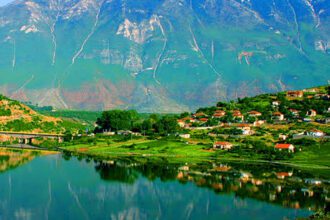
In Dhërmi, I saw how mountains and clear water can exist within the same frame.
In Himarë, I stopped thinking about the next destination.
In Shkoder, I realized that a transfer city could deserve its own story.
In Theth, the journey moved away from the coast and into the mountains.
These places did not feel like separate boxes on an itinerary.
Together, they became my experience of Albania.
Plan your Albania itinerary
A successful Albania trip is not about including the largest possible number of destinations.
It is about choosing the right route, allowing enough time for transport and understanding which region matches the experience you want.
Use RotaBot to build a personalized route based on your travel dates, pace and interests.
For boat trips, walking tours, transfers and local experiences, compare Albania activities on GetYourGuide. Check whether MOZARTCULTURESTR5 provides a 5% discount for your selected activity.
Continue planning with these guides:
- Vlora Travel Guide
- Shkoder Travel Guide
- Theth Travel Guide
- Albanian Riviera Itinerary
- Tirana Travel Guide
- Albania Without a Car
- Albania Travel Budget
Albania is changing quickly.
If you want to experience its beaches, cities and mountains before every journey becomes fully standardized, this may be the right time to go.