Florence in 2 days is not enough to see everything.
Fortunately, you do not need to.
Florence works particularly well for a short trip because many of its major sights sit within a relatively compact historic centre. The mistake is trying to turn those two days into a museum marathon.
A better plan is simple:
Day 1: Renaissance Florence — Duomo, David, Uffizi and Ponte Vecchio
Day 2: The city beyond the checklist — markets, neighbourhoods, churches and the view from Piazzale Michelangelo
This itinerary is designed for a first visit and assumes you want to see Florence’s major works without spending every waking hour inside a museum.
Florence in 2 Days: Quick Itinerary
Day 1
Duomo → Accademia → Piazza della Signoria → Uffizi → Ponte Vecchio → Santo Spirito
Day 2
Mercato Centrale → Santa Maria Novella → Santa Croce → Oltrarno → Piazzale Michelangelo → San Miniato al Monte
The most important thing before you start:
Book the attractions that control your schedule first.
For most first-time visitors, that means the Duomo climb, Uffizi Gallery and Accademia Gallery.
Read our What to Book in Florence in Advance guide before buying anything.
Day 1: Renaissance Florence
8:00 AM — Start at the Duomo
Begin your first morning in Piazza del Duomo.
The Cathedral of Santa Maria del Fiore is Florence’s visual centre, but the complex is larger than the cathedral itself.
You also have:
- Brunelleschi’s Dome
- Giotto’s Bell Tower
- Baptistery
- Opera del Duomo Museum
- Santa Reparata
If you want to climb Brunelleschi’s Dome, this is one reservation you should not leave until the last minute.
The official Brunelleschi Pass requires a specific time slot for the Dome. The climb involves 463 steps and there is no lift. The other monuments included in the pass can be visited during its three-calendar-day validity.
If climbing the Dome is not important to you, do not automatically buy the most comprehensive pass.
Choose the ticket based on what you actually want to see.
→ Compare Florence Duomo tickets and guided experiences
Read next: Florence Duomo Tickets Explained: Which Pass Do You Need?
10:00 AM — Accademia Gallery
From the Duomo, walk north towards the Accademia.
This museum is much smaller than the Uffizi, which makes it ideal for a short Florence itinerary.
The obvious reason to come is Michelangelo’s David.
But seeing David in person is different from seeing the image reproduced thousands of times online. Its scale, positioning and unfinished sculptures nearby make the visit considerably more interesting than simply ticking off another famous artwork.
The Accademia currently recommends reservations because visitors without one may face long waits. It is generally open from 8:15 AM to 6:50 PM and closed on Mondays, although special openings can occur.
For most visitors, allow roughly an hour to 90 minutes.
→ Compare Accademia and David tickets
12:00 PM — Piazza della Signoria
After Accademia, return towards Florence’s political centre.
Piazza della Signoria is where Florence begins to make more sense.
The Renaissance was not simply a period when talented people made beautiful paintings.
It was also about money, political power, wealthy families and the way a city used architecture and art to communicate authority.
Spend some time around Palazzo Vecchio and the Loggia dei Lanzi rather than rushing directly to the Uffizi entrance.
Then stop for lunch nearby but avoid choosing a restaurant simply because it faces the busiest part of the square.
Walk a few streets away.
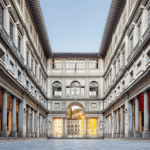
2:00 PM — Uffizi Gallery
The Uffizi deserves the longest museum block of the trip.
Its collection moves through centuries of Italian and European painting, with works associated with Botticelli, Leonardo, Michelangelo, Raphael and many others.
At the moment, the Uffizi is open Tuesday to Sunday from 8:15 AM to 6:30 PM and closed on Mondays. Advance-entry tickets are also sold through the museum’s official system.
Do not try to study every room.
You will eventually stop seeing paintings and start seeing walls.
Instead, identify a handful of works or artists before entering and give them your attention.
For a first visit, two to three hours is usually a much more sensible rhythm than attempting to absorb the entire collection.
If Renaissance art is unfamiliar to you, the Uffizi is also one of the places where a guided tour can genuinely add value.
→ Compare Uffizi tickets and guided tours
Read next: Uffizi Gallery Tickets: Which Ticket Should You Buy?
5:00 PM — Ponte Vecchio
After several hours indoors, walk towards the Arno.
Ponte Vecchio is one of Florence’s defining landmarks and stands on the location of the bridge of ancient Florentia; the current form dates to the medieval reconstruction of the bridge.
You do not need to spend an hour shopping here.
Walk across it, look back along the river and continue into Oltrarno.
Florence becomes more enjoyable once you stop treating Ponte Vecchio as the end of the historic centre.
It is really a gateway to the other side of the city.
Evening — Santo Spirito
Finish your first day around Santo Spirito.
The atmosphere is different from the museum-heavy areas north of the river.
Have dinner, walk through the surrounding streets and give yourself an evening without another timed entrance.
After the Duomo, Accademia and Uffizi, you have already consumed enough Renaissance masterpieces for one day.
Day 2: Florence Beyond the Major Museums
Day two should feel less scheduled.
You have already seen the three attractions most likely to dictate your timetable.
Now you can walk.
9:00 AM — Mercato Centrale and San Lorenzo
Start around San Lorenzo and Mercato Centrale.
The area gives you a different version of Florence from the polished museum route.
Walk through the surrounding streets, have coffee and use the morning to explore without constantly checking the time.
If you are interested in the Medici, San Lorenzo also provides a natural starting point for understanding how deeply the family shaped Florence.
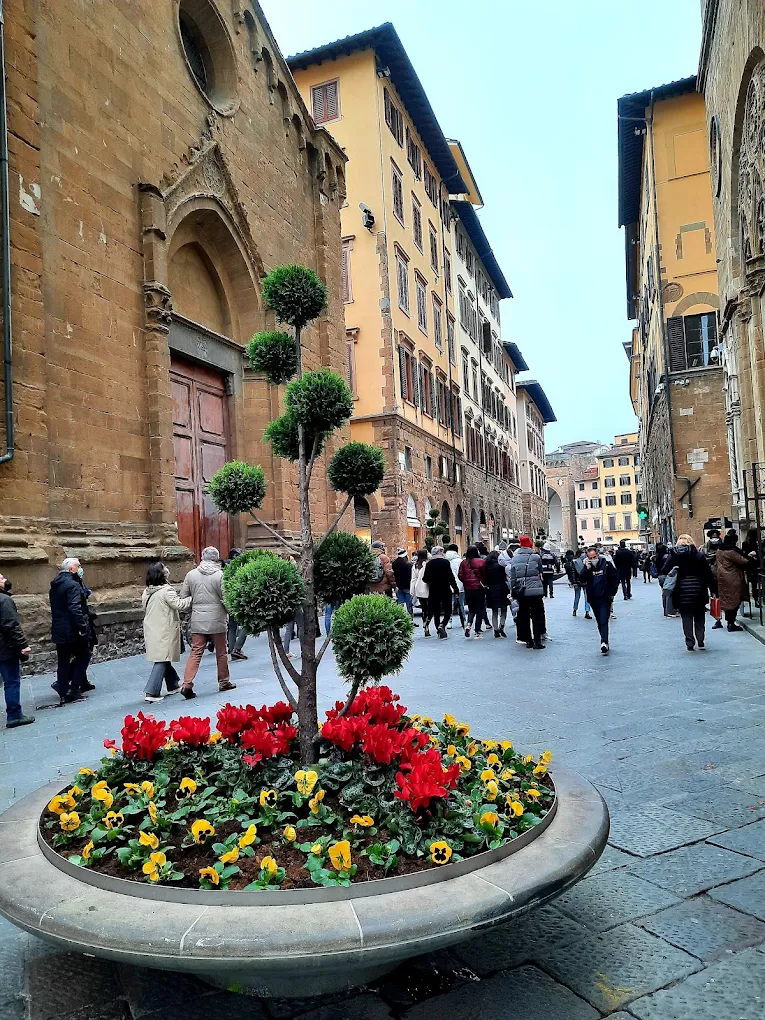
11:00 AM — Santa Maria Novella
Walk towards Santa Maria Novella.
Travellers often treat the name purely as Florence’s main railway station, but the church and surrounding piazza deserve attention in their own right.
This is also a good point in the itinerary to ask yourself whether you actually want another museum.
If the answer is no, do not force one into the schedule.
Florence rewards walking.
12:30 PM — Santa Croce
Continue east towards Santa Croce.
The neighbourhood provides a good transition between Florence’s monumental centre and streets that feel slightly less compressed by the city’s main tourist route.
Stop for lunch around this part of town.
If you are particularly interested in Florentine history, the Basilica of Santa Croce can also be added here.
Otherwise, use the time simply to explore.
3:00 PM — Cross Back into Oltrarno
Spend your final afternoon south of the Arno.
You could return through Ponte alle Grazie rather than Ponte Vecchio and explore Oltrarno at a slower pace.
Depending on your interests, this is where you can add:
- Palazzo Pitti
- Boboli Gardens
- artisan workshops
- cafés around Santo Spirito
- smaller churches and streets
If you only have two days, I would not automatically add Pitti Palace simply because it appears on every Florence checklist.
Choose it if Medici history, costume, palace interiors or the collections genuinely interest you.
Otherwise, keep walking.
5:30 PM — Piazzale Michelangelo
End the trip above the city.
Piazzale Michelangelo is Florence’s best-known panoramic terrace and gives you the classic view across the Arno towards the historic skyline.
Yes, it is popular.
That does not make the view less worthwhile.
Try to arrive before sunset rather than exactly at sunset. It gives you time to find a position and watch the light change across the city.
Optional: San Miniato al Monte
If you still have energy, continue uphill towards San Miniato al Monte.
This gives you a slightly quieter ending than returning immediately to the centre.
At this point you can look back across Florence and recognise much of what you have walked through during the previous two days.
That is a much better way to finish the city than squeezing in one final museum because you feel you should.
What Should You Book Before a 2-Day Florence Trip?
For a short first visit, I would prioritise reservations in this order:
1. Brunelleschi’s Dome
If you want the climb.
2. Uffizi Gallery
Especially if your dates are fixed.
3. Accademia Gallery
If seeing David is important to you.
After those three, build the rest of the city around your interests.
You do not need a ticket for every memorable experience in Florence.
Ponte Vecchio, Piazza della Signoria, Santo Spirito and the view from Piazzale Michelangelo cost nothing.
For a full breakdown, read:
What to Book in Florence in Advance: 7 Tickets You Actually Need
Are 2 Days in Florence Enough?
Two days are enough for a strong first visit.
You can see the Duomo, David, Uffizi, Ponte Vecchio, Florence’s major piazzas and spend time in Oltrarno without making the trip feel completely rushed.
Three days are better if you want to add Pitti Palace, Boboli Gardens or another major museum.
And if you want to visit Siena, San Gimignano or Chianti, I would add a separate day rather than trying to squeeze Tuscany into these two.
Want to See Tuscany Too?
Florence is one of the easiest bases for exploring the surrounding region.
If you have an extra day, compare organised trips to Siena, San Gimignano and Chianti before deciding whether renting a car or planning public transport is worth the extra logistics.
→ Compare Tuscany day trips from Florence
[GETYOURGUIDE TUSCANY LINK]
Coming next: Best Tuscany Day Trips from Florence Without a Car
Final Thoughts
Florence does not require a complicated itinerary.
It requires restraint.
Reserve the three attractions where timing matters most.
Walk between them.
Leave enough space to look at the buildings, streets and people rather than constantly searching for the next pin on Google Maps.
In two days, you will not see all of Florence.
But you can see enough to understand why people keep returning.