The kimono is a national costume of Japan and also one of the most eye-catching traditional costumes in the world. This iconic robe was worn by everybody in Japan up till the mid-nineteenth century. It attracts fashionistas from all over the world.
In Japan, the kimono is closely related to etiquette and can reflect the form of events. Wearing the right clothes for the right activities is a way to show respect and gratitude. Though it’s not an everyday choice, however, this ancient garment is still worn on special occasions, weddings, funerals, and tea ceremonies.
Kimono in History:
This iconic robe was originally inspired by Chinese culture, mainly from Chinese Hanfu (traditional clothes of Han Chinese) in the Wu area of Jiangnan, China. The kimono we know today was introduced in the Heian period (794-1192). Japanese robe is always worn on important festivals or formal occasions. It is a polite and very formal dress.
Gradually, the practice of wearing layered kimonos became popular, the Japanese began to pay attention to how different colored robes match together and increased their sensitivity to colors. Usually, the color combination represents the seasonal color or the political class to which one belongs. Formal Japanese kimonos have been replaced by more comfortable Western clothing and Japanese yukatas as casual wear.
What makes it unique:
This traditional garment is made from a single piece of fabric called Tanmono, measuring 36-42 cm wide and 12 m long. Men’s and women’s clothing styles are slightly different, mainly sleeves, women’s sleeves are usually longer to provide a more elegant appearance.
One’s level of formality and status can also be expressed through the design, style, and color of the kimono, and even the way Obi (sash) is tied on the back. Above all, the garment should always be worn with the left side up the right side. As only corpses wearing costumes for funerals are allowed to take the right side to the left.
Styles of Kimono:
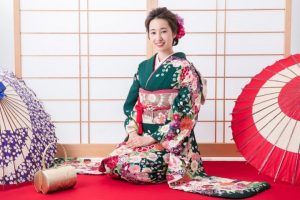
The kimono is generally more popular among women than men. Men’s styles tend to be more conservative in colors and patterns. They usually use solid color-brown, blue or gray. As women always have a variety of colors and patterns to choose from. The pattern and color of the are closely related to the season, so according to the season, certain colors and patterns are chosen. As in the spring season, blue kimono is considered a summer color.



How Kimono is put together?
Traditionally, the skills of wearing a kimono were passed on from mother to daughter, but nowadays, special schools pass on these necessary skills.
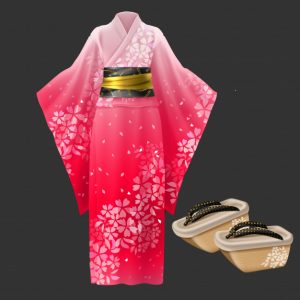
Firstly, to wear is Tabi (white cotton socks). Secondly, undergarments, a top, and a wraparound skirt. Thirdly, the most important, Nagajuban, under-kimono is tied with Datemaki belt and finally wore the robe left side on the right side, and tied with Obi (sash ribbon). The inside of the kimono collar depicts a robe, Nagajuban Haneri, about an inch long. The loose neck design should give people the idea of the neck, which is considered the most sensual part of women wearing kimonos. Lastly, pair with Zori sandals, which are usually worn outside.

The history of the Kimono is the backbone of Japanese culture. It is hard to imagine Japan, without this iconic robe, that has become a global icon of Japan.
References:
- Green, C. (2019, July 12). The Surprising History. JSTOR Daily. https://daily.jstor.org/the-surprising-history-of-the-kimono/
- Fong, T. (2020, September 7). An Introduction To Japanese Kimono. VOYAPON. https://voyapon.com/kimono-japanese-traditional-clothing/
- History of robes. (n.d.). Web Japan.Org. Retrieved May 25, 2021, from https://web-japan.org/kidsweb/virtual/kimono
- The Japanese costume history and development. (2020, July 16). Kyoto Kimono Rental Wargo. https://kyotokimono-rental.com/en/column/the-japanese-kimono-history-and-development.html
- Exploring the complex history. (2020, March 30). I-d. https://i-d.vice.com/en_uk/article/m7qw3a/exploring-the-complex-history-of-the-kimono