Pink Rebellion: Kawaii Culture
Huge eyes, bright hairstyles, doll-like dresses, gleaming make-up, and false lashes, just to name a few… All Japanese pop culture fans know Kawaii for its extremely cute look. It spread across the globe as a result of the increasing popularity of manga and anime. And so now, by rise of social media, the Kawaii trend has ended up winning our hearts!

So… What Does Kawaii Mean?
Kawaii means cute (written as かわいい or 可愛い in Japanese). It can be translated as loveable, adorable, and sweet as well. Today, it is the culture of cuteness in Japan. It can refer to any kind of items, but also humans and non-humans which are sweet, charming, childlike, and tiny. For instance, cute handwriting, foods, animes, mangas, and characters such as Hello Kitty and Pikachu.
However, kawaii is not only a fashion or a style. The story behind the culture is different. It is a rebellion of the youth of Japan in the late 80s.
How Did The Kawaii Movement Emerge?
The great wars, traumas, and pains are the biggest effects on the emergence of subcultures and rebellions. Especially in the 20th century, the new generations started to break the rules and get out of their limits. They created new subcultures to express themselves. For instance; the hippies emerged in the US during the 60s after Vietnam War. Also, the Goths created another youth movement in England as a reaction to traditional rules during the 80s. And these kinds of rising trends affected other young groups all around the world.
Historically, Japanese society is known for being strict and patriarchal that forces people to act according to the social norms. In such Asian societies like Japan, the individual has to follow the way of life as the others do. Social expectations like studying, getting married, working, having kids, and even such simple actions as dressing are determined according to the perception of the community.
As you know, Japan suffered serious damage following World War II and this war was extremely traumatic for society. The social expectations created individuals that feel oppressed and led them into the depression. As a result, they began the new youth movements by modifying their clothing style and expressing their feelings in this manner.

A typical day in Tokyo… Train station during the rush hours. (Photo credits to japantimes.co.jp)

Young Japanese girls kawaii mode-on! (Photo credits to wonderland-sweet.tumblr.com)
Harajuku: The Mecca of Kawaii Culture
Harajuku is the district known as the center of Japanese youth culture and street fashion in Tokyo. There is not only one kawaii style but also various subcultures; lolita, gyaru, kogal, ganguro, decora and visual kei are some of the most popular ones.

(Photo credits to tokyocheapo.com)
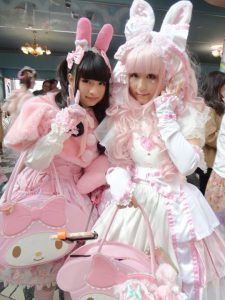
Pastel colors and Victorian Goth-inspired dresses are the main features of the Lolita style. Also, you can find some Lolita Shops in Tokyo where you can rent some dresses to wear on. They even help you to wear long, colorful wigs, put on makeup, and take professional photos by their photographers.

Decora style includes colorful wigs, stickers on the face, neon bright-colored clothes, cute accessories, and hairpins. Kyary Pamyu Pamyu is the most popular idol known for kawaii-style songs in Japan. Her song “Pon Pon Pon” is the most famous one which can be defined as the national anthem of kawaii-fans.


(Photo credits to tokyofashion.com)
Visual Kei is another subculture you can see in Harajuku. The style is characterized by the use of varying levels of make-up, elaborate hairstyles, and flamboyant costumes. Besides, androgynous aesthetics which means the combination of masculine and feminine characteristics into an ambiguous form is another key element in the Visual Kei style. So, we see another kind of rebellion against the gender roles determined by strict social norms.
There are also so many kawaii-themed cafes in Japan like Kawaii Monsters.


(Photo credits to tokyofashion.com)
Sebastian Masuda is the producer and artistic director of the Kawaii Monster Café. Kawaii Monsters was the most popular one known for the kawaii movement, but it is permanently closed this year due to the Coronavirus crisis. However; the memory will live in the hearts of Kawaii-lovers! RIP Kawaii Monster Cafe.
Here is the most worldwide popular Japanese character Hello Kitty was created by Yuko Shimizu in 1974 and it is known as the pioneer of kawaii Japanese characters.
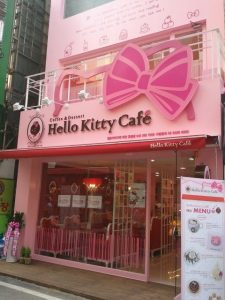
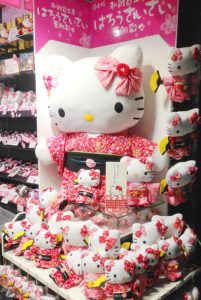
The character Hello Kitty gained popularity all over the world and Hello Kitty-themed cafés can be found in many different countries recently. You can try adorable cute Hello Kitty-shaped cakes or drink coffees while enjoying the sweet atmosphere like dreamland.
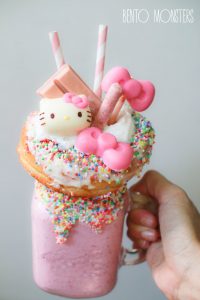

(Photo credits to bentomonsters.com)
As I mentioned before fashion is not only fashion. There is always a story behind it. Rebellion is not always aggressive and bloody. Sometimes, it is soft like a pancake, sweet as a cotton candy, lovely as a kitty, and pink as a Kawaii.
So, until the next article, KEEP CALM AND STAY KAWAII!

REFERENCES
www.rebelsmarket.com/blog/posts/harajuku-style-what-is-it-all-about
www.en.wikipedia.org/wiki/Kawaii
www.visualkei.fandom.com/wiki/Kei_Style
www.livejapan.com/en/in-tokyo/in-pref-tokyo/in-harajuku
www.voyapon.com/kawaii-monster-cafe-harajuku-tokyo/
www.kawaiisekai.com/what-is-the-real-meaning-of-kawaii/
www.timeout.com/tokyo/things-to-do/50-things-to-do-in-harajuku
www.tokyocheapo.com/entertainment/harajuku-takeshita-street-guide/