The development of technology continues at a great pace. It appears in every field from industry to education. But, what about emotions? Let’s take a look at the Virtual Reality technology that reunites a dead girl with her mother.
Background
Beginning in the late 19th century, scientists began testing whether they could create a sense of artificial reality. As a result of Sir Charles Wheatstone’s studies on eyes, a new dimension began to be mentioned. According to him, if both eyes are fixed to a certain degree, a new dimension emerges which is called 3D.

The discovery of 3D inspired 20th-century scientists. The first of these was Morton Heilig’s Sensorama. He invented Sensorama that activated multiple senses. In this device, where short films were shown, the audience could even smell. There was also loud noise, colorful scenes, and a vibrating chair. Heilig’s goal was the same as those of his future scientists: To create a reality with technology.
The Concept of Virtual Reality
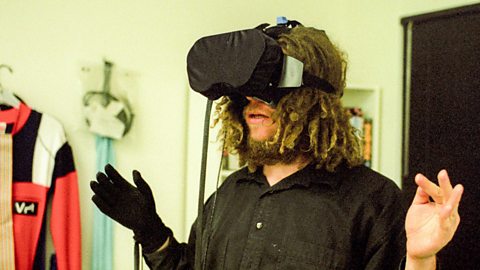
However, these studies were carried out independently of each other. Although they all had a common purpose, none of them was yet a technological concept.
The term virtual reality was coined by Jaron Lanier in 1984. Before founding the VPL company, Lanier had closely followed the work on virtual reality. The things he focused on were things that didn’t actually exist but felt like they were there.
Since Virtual Reality got its name, both theoretical and practical work gained momentum. After all these efforts, we now have VR glasses. We use these headsets everywhere, from the entertainment world to education.
But, what about the feelings?
Reunion With A Deceased Daugther
In early 2020, an interesting experience took place. Korea-based VIVE Studios decided to use VR technology to bridge the gap between a mother and her deceased daughter. The woman named Jang Ji-sung shared a lot of personal information about her 7-year-old daughter who died. On the other hand, the company turned the data it obtained into VR using artificial intelligence. After months of preparation, Jang was taken to a room and contacted her daughter with VR equipment.

Thanks to artificial intelligence, the little girl was allowed to answer certain questions. The little girl hugging Jang and told her she was fine, then walked along holding her mother’s hand and continued to chat with her. This experience, which Jang lived in tears, became a trend on social media.
After this event, many psychological and sociological analyzes were made, and some claim that VR technology has gone beyond its limits. It is stated that many people completely break away from reality and adopt a virtual world that may arise in the future.
RESOURCES
Kim, V. (May 27, 2020) Virtual Reality, Real Grief. https://slate.com/technology/2020/05/meeting-you-virtual-reality-documentary-mbc.html
IMAGE SOURCES
- Studies of Sir Wheatstone, 3D (n.d.). https://www.stereoview.me/wheatstone
- Jaron Lanier: The visionary behind virtual reality – BBC Ideas. (n.d.). [Photo]. https://ichef.bbci.co.uk/images/ic/480xn/p05tz0nm.jpg
- South Korean mother given tearful VR reunion with deceased daughter. (n.d.). [Photo]. https://tbsnews.net/sites/default/files/styles/amp_metadata_content_image_min_696px_wide/public/images/2020/02/14/vr_child.png?itok=NKY_iEvT