Performance art is one of the branches of contemporary art movement. It is defined as portraying an action being experienced in the present. The history of performance in the visual arts goes back to the 1910s futurist shows and dada cabarets. Throughout the 20th century, performance art was frequently regarded as a non-traditional method of creating art.
Especially in the 1950s and 60s, artists used performance art as a challenge to material items like sculptures, paintings, or architecture. Instead of these, performance art uses video, photographs, installation, and artists’ bodies. The term performance art was invented in these times. This was mainly related to the issue of purchasing artworks. Artists did not want to sell their works due to preventing the use of their works in a way that they did not want to.
Performance art becomes associated with conceptual art in the postwar period. After, recently, artists use performance art for engaging with social problems and political issues. There are many performance art pieces. Yet, some of them were more sensational than the others.
5 Famous Examples of Performance Art Pieces
1. Blog by Ai Weiwei

Fig.1: Ai Weiwei’s Blog Writings, Interviews, and Digital Rants, 2006–2009. (n.d.). [Photograph]. MitPress.Mit.Edu. https://mitpress.mit.edu/books/ai-weiweis-blog
This piece is a document of Weiwei’s 112 entries about the Chinese government. He wrote from 2007 until 2009 due to a shutdown by the government. There is an incorporation of new media into his practice. He aimed to highlight emerging communication ways’ broad influence on individuals. Also, he wanted to show its impact on social awareness.
2. Open Score by Robert Rauschenberg

Fig.2: Robert Rauschenberg «Open Score». (n.d.). [Photograph]. MedienKunstNetz.De. http://www.medienkunstnetz.de/works/open-score/images/2/
Rauschenberg performed this piece in 1966. The film begins with a tennis match between a man and a woman. There are sounds of the balls hitting the rackets. There was a compact FM transmitter that fit in the handle of the racquet. The man and woman gradually fade into darkness. At the same time, the audience was able to see themselves on three screens. The aim is to leave the interpretation of the metaphor to the audience.
3. 4’33” by John Cage

Fig.3: HAFTANIN ŞARKISI NO 10: JOHN CAGE – 4’33”. (2019). [Photograph]. SanataTak.Com. http://www.sanatatak.com/view/haftanin-sarkisi-no-10-john-cage-433
This piece consists of 4 hours 33 minutes of silence. In 1952, David Tudor sat quietly at his piano during the premiere. After, he was opening and shutting the keyboard lid in three movements. While the audience was waiting for the performance to begin, this was the performance itself. Respectively, the audience heard the wind, raindrops, and either their or others’ voices during these three movements. The aim was to make the audience associate silence as the soundtrack of life. Also, to make them consider all sounds in their environment is music.
4. One Year Performance (Time Clock Piece) by Tehching Hsieh
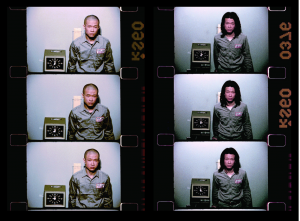
Fig.4: Taiwan Pavilion at the Venice Biennale. (2017). [Photograph]. E-Flux.Com. https://www.e-flux.com/announcements/54717/tehching-hsiehdoing-time/
Hsieh punched a clock every hour for a year between 11 April 1980 and 11 April 1981. He also snapped a single photo of himself with a 16mm movie camera every time he hit the clock. This footage resulted in a 6-minutes animation. Also, he shaved his head before the performance to let his hair reflect the time passing. The aim was to reflect the materialization of time. The artists investigated space and human condition relationships with the addition of limitations.
5. Marina Abramović and Ulay. Rest Energy
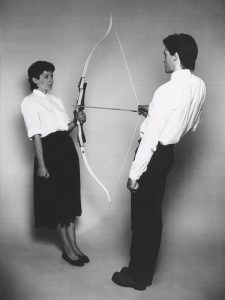
Fig.5: Marina Abramović and ULAY. Rest Energy. 1980. (n.d.). [Photograph]. MoMa.Org. https://www.moma.org/audio/playlist/243/3120
This performance took place in 1980. Abramović and Ulay hold an arrow on the weight of their bodies. The arrow was pointing at Abramović’s heart. Also, there were microphones on each one’s heart for being able to hear their heartbeats. While the performance was taking place, their heartbeats started to become more intense. The aim was to display trust.
Sources:
AI WEIWEI’S BLOG: Writings, Interviews, and Digital Rants, 2006–2009. (2011, September 30). The Brooklyn Rail. https://brooklynrail.org/2011/10/art_books/ai-weiweis-blog-writings-interviews-and-digital-rants-2006-2009
Chen, S. (2020, July 27). “Time Clock Piece” (One Year Performance 1980–81) -Tehching Hsieh. Sueann Chen. https://sueannchen.com/writing/timeclockpiecehsiehtehching
Marina Abramović and ULAY. Rest Energy. 1980 | MoMA. (n.d.). The Museum of Modern Art. Retrieved June 13, 2021, from https://www.moma.org/audio/playlist/243/3120
Robert Rauschenberg, Open Score. (2015, February 9). Numeridanse Tv. https://www.numeridanse.tv/en/dance-videotheque/robert-rauschenberg-open-score
What is performance art? –. (n.d.). Moderna Museet i Stockholm. Retrieved June 13, 2021, from https://www.modernamuseet.se/stockholm/en/exhibitions/marina-abramovic/vad-ar-performance/
Tate. (n.d.). Performance art – Art Term. Retrieved June 13, 2021, from https://www.tate.org.uk/art/art-terms/p/performance-art