I’ve brought you up to date on Forensic Science. I may return to it when there’s a new breakthrough, but I thought I’d try something different for a while. There’s a lot of science out there that gets very little acknowledgement, so I’m going to talk about those. The oddball stuff; the sort that gets shortlisted for the Ig Nobel Prize. Recently, I realised that few people understand the placebo. Most of the people I talked to thought that placebo meant a medicine did nothing. And then there were the folks who mistook placebo for psychosomatic. So today, I intend to discuss how placebos work.
Definitions
Anyone who follows my articles knows how much I love a good definition…
Psychosomatic
Psychosomatic generally refers to a physical illness that is caused or made worse by a mental condition, such as stress (Google1). This can be something like stomach pains in a child who is worried about school. People who have a psychosomatic disorder often appear at the doctor’s office with symptoms that seem to have no medical cause.
Placebo
The word for placebo comes from the Latin, to please, placere (Google 2). The National Cancer Institute informs us that a placebo is an inert substance that looks the same as the real drug, to test the activity of the novel medicine (NIH 1). The reason drugs are tested against a placebo, is that often people feel better after taking a tablet that has no recorded pharmacological effect (UCLA).
In modern usage, a placebo is used in drug trials. Most often used in a double-blind trial (one where neither the patient nor the dispensing person knows if they are receiving the inactive pill or the one with the active ingredient), the new drug must be shown to work better than the placebo (NIH 2).
In short, psychosomatic means worry makes you feel ill, placebo means receiving a pill or treatment of any sort that makes you feel better.
Additional definition: Ig Nobel Prize
I mentioned the Ig Nobel Prizes earlier. These are a satirical prize handed out to scientific research that is overshadowed by the big announcements. The founder, Marc Abrahams shown in image 1, describes them as ‘first they make you laugh and then they make you think’ (Abrahams, 2024).
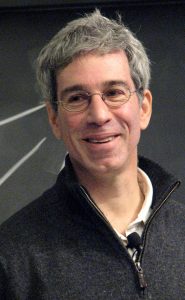
This is particularly relevant to this month’s topic, because the 2024 medical Ig Nobel prize went to three researchers who proved a placebo that causes painful side effects works better than one which doesn’t. This is the whole basis of the placebo effect (Abrahams, 2024).
But how does a placebo pill, which is designed to be inert, give any therapeutic effect at all?
What is the Placebo effect?
Why would the researchers bother to test their novel medicine against a supposedly inert substance? After all, if a placebo has no medical effect, then surely any improvement in the patient’s condition must be due to the novel drug. Unfortunately, that is not the case. Doctors have noticed that some patients have their health improve just from being told that they are being given a medicine that works.
A short history of placebos
Placebo was a religious word up until the 18th Century, used in the Vespers for the Dead, Placebo Domine, I will please the Lord. Prior to the 18th Century, what we call placebo was termed ‘imaginatio’. Michel de Montaigne (1533-1592) wrote about how imagination both caused and cured illness (Jütte, 2013). Imaginatio was both psychosomatic and placebo, which explains the confusion in the terms for the general population.
The first use of placebo as a medical term appears by the Scottish doctor, William Cullen, in a series of lectures he gave in 1772. He described using a placebo as a way of comforting the pain of dying patients. His definition of placebo was a medicine given to please a patient but without hope of any curative value (Kerr, 2008).
These early placebos were lower doses of an actual medicine rather than the medically-inert substances used today in medical trials (Kerr, 2008).
Moving on to World War 2, army doctor, Henry Beecher ran out of morphine. So, to ease the wounded soldiers, he administered a saline solution and told them it was morphine. To his surprise, their pain decreased. This was the discovery of the Placebo Effect (Perry, 2012).
How does the Placebo Effect work?
Until recently, no one really knew how the placebo effect works. At best guess, it is a psychological effect that was believed to involve dopamine and endorphins, both of which make you feel good.
Undertaking medical trials involves rituals. The patient will see a person in a white coat. They’ll receive instructions and a little leaflet. They have to sign the waiver, as seen in image 2.

Credit: NIAID, CC BY 2.0 <https://creativecommons.org/licenses/by/2.0>, via Wikimedia Commons
After all this, they will then be handed the pill to take (LeWine, 2024). Pills that are a pretty colour improve a condition faster than white tablets and the more expensive a treatment appears, the better it works (Wilson). All of these things interact with your moods and your emotional reactions.
The little rituals convince you that you will feel better, and this triggers the body’s ability to heal. So, it was decided that the ‘bed-side’ manner of the clinician started the healing process (LeWine, 2024).
In 2024, Clinicians at the University Hospital Essen (DE) suppressed the release of dopamine in patients before assessing pain using two identical, non-active, ‘pain-relief’ creams. The patients still felt pain relief, suggesting that dopamine has nothing to do with the placebo effect (Lesté-Lasserre, 2024).
Additionally, researchers at the University of North Carolina (USA) recently found a neurological pathway in mice, which could explain the pain-relieving properties of the placebo effect. This brain circuit links the pontine nuclei and the cerebellum, even though neither part of the brain had previously been associated with pain. Image 3 shows a simplified brain structure.
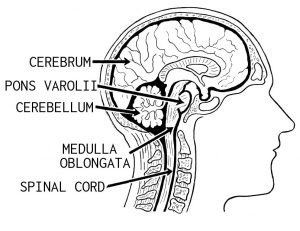
Credit: Pearson Scott Foresman, Public domain, via Wikimedia Commons
They are currently trying to find similar neurology in humans (Chen, 2024).
What if you know you’re taking a placebo?
Sometimes people are prescribed what is called an open-label placebo. It has been described as being similar to the Pavlov’s dog drooling when the dinner bell rings. Even if you know you are receiving a placebo, the simple ritual of being handed a medicine by a doctor (because we know doctors make us well) can switch on your immune system (Health, 2016). Image 4 shows a series of open-label placebos.

Credit: NIH, objects donated by Elaine and Arthur Shapiro, Public domain, via Wikimedia Commons
Case study
Take, for example, migraine sufferers. In trials for a new painkiller, migraine sufferers were divided into three groups. One group was given the painkiller, clearly labelled with the drug’s name. One group received nothing. And the third group was handed a pill labelled placebo. Even though they saw the placebo label, the pain of the third group was reduced by about half that of those who received the actual medicine. This appears to show that the ritual of taking the medicine does stimulate a portion of the pain relief (LeWine, 2024).
Isn’t handing out placebos a bit unethical?
Ethics are a major consideration in medicine. A treatment has to work if a doctor is to prescribe it. But, in the earlier sections, I mentioned that people’s health is improving with a placebo, so maybe it would be unethical to avoid prescribing placebos (Health, 2016).
Conclusion
Some people still believe that a placebo is a pill that doesn’t work. However, it is the placebo effect that makes trials of new medicines difficult. All the rituals involved in the study prime the patient to believe that they will be affected by the medicine. The placebo effect jumps in and initiates the immune system, or activates the internal pain control system. The patient feels better. All of this shows why it is necessary to test novel drugs against a placebo, to show that the medicine has a true beneficial effect.
References
Abrahams, M. (2024) The Back Pages. New Scientist. 21 September. p48.
Chen, C., Niehaus, J.K., Dinc, F. et al. Neural circuit basis of placebo pain relief. Nature 632, 1092–1100 (2024). https://doi.org/10.1038/s41586-024-07816-z
Google (1) Dictionary. Psychosomatic. https://www.google.com/search?client=opera&q=definition+of+psychosomatic&sourceid=opera&ie=UTF-8&oe=UTF-8
Google (2) Dictionary. Placebo. https://www.google.com/search?client=opera&q=definition+of+placebo&sourceid=opera&ie=UTF-8&oe=UTF-8
Health Sciences Division. (2016) Placebos Work Even When Patients Know What They Are. University of Oxford. 5 May. https://www.phc.ox.ac.uk/blog/placebos-work-even-when-patients-know-what-they-are#:~:text=So%20even%20though%20we%20know,mere%20sound%20of%20a%20bell
Jütte, R. (2013). The Early History of The Placebo. Complementary Therapies in Medicine. April. Vo 21 Issue 2. p94-97. https://doi.org/10.1016/j.ctim.2012.06.002.
Kerr, C. E., Milne, I., & Kaptchuk, T. J. (2008). William Cullen and a missing mind-body link in the early history of placebos. Journal of the Royal Society of Medicine, 101(2), 89–92.
Lesté-Lasserre, C. (2024). Pain Relief from The Placebo Effect May Not Actually Involve Dopamine. New Scientist. 24 September. https://www.newscientist.com/article/2449286-pain-relief-from-the-placebo-effect-may-not-actually-involve-dopamine/
LeWine, H.E. (2024) The Power of the Placebo Effect. Harvard Health Publishing. July 22. https://www.health.harvard.edu/newsletter_article/the-power-of-the-placebo-effect
NIH (1). Placebo. National Cancer Institute. https://www.cancer.gov/publications/dictionaries/cancer-terms/def/placebo
NIH (2). Double-Blind Study. National Cancer Institute. https://www.cancer.gov/publications/dictionaries/cancer-terms/def/double-blind-study
Perry, S. (2012). The Power of Placebo. Brainfacts.org. 31 May. https://www.brainfacts.org/archives/2012/the-power-of-the-placebo#:~:text=Henry%20Beecher%20discovered%20the%20placebo,was%20morphine%20to%20calm%20them
UCLA Health (2019) Placebo Effect: Sugar Pills as Medicine. UCLA Health. March 14. https://www.uclahealth.org/news/article/placebo-effect-sugar-pills-as-medicine#:~:text=The%20placebo%20effect%20occurs%20when,treatments%20work%20remains%20a%20mystery
Wilson, C. The Placebo Effect. New Scientist. https://www.newscientist.com/definition/placebo-effect/
Images
Brain diagram Pearson Scott Foresman, Public domain, via Wikimedia Commons
Open label placebo NIH, objects donated by Elaine and Arthur Shapiro, Public domain, via Wikimedia Commons
Patient signs a waver NIAID, CC BY 2.0 <https://creativecommons.org/licenses/by/2.0>, via Wikimedia Commons
Marc Abrahams Davidlkessler, CC BY-SA 4.0 <https://creativecommons.org/licenses/by-sa/4.0>, via Wikimedia Commons