Every individual who starts to think abstractly and have dreams becomes aware of his surroundings, wishes, and desires. Imagination brings with its idealism. After the person becomes an individual and can make his own decisions; it creates a reaction to things that he dislikes. One, two, five, ten, a hundred and maybe thousands of people… They all react to the object they complain about. These reactions grow like a snowslide. Everything starts with a spark, and that thing we call “revolution” happens.

The Etymology of the Revolution
The etymological origin of the word revolution is very old. It was first mentioned as “revolvere” or “revolutionem” in Latin in the 13th century. “Rovelvere” means roll back or beat down in today’s English. This word, which means to turn something decrepit into a new one, began to be used politically in the 15th century.
Fundamentals of the Revolution
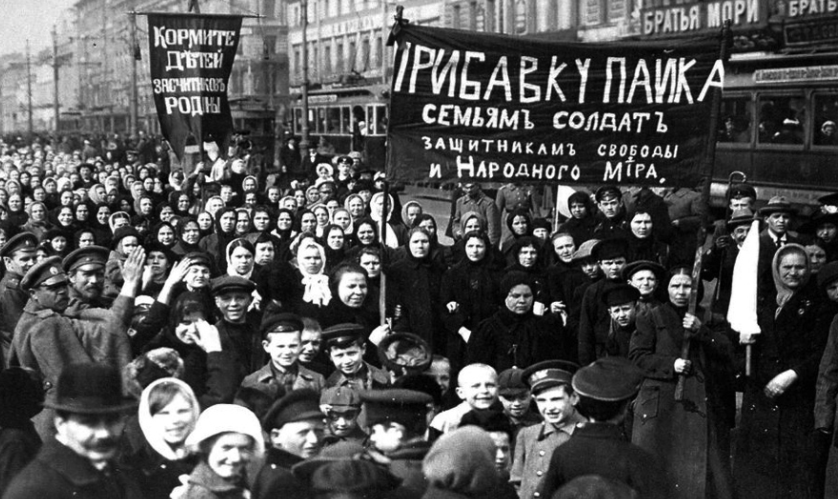
Throughout history, societies have attempted certain actions in order to announce their reactions to many authoritarian institutions, especially political authority. These produced a series of events, with a domino effect. The old one was overthrown, the new one installed. However, the process was not as simple as described, of course. Perhaps it was too difficult to break down concepts that have existed for centuries. So it required a systematic organization, confident leaders, and of course a strong idealism. Because the desire to overthrow something may equal the desire not to be overthrown for the other side.
Why people get mad?
Revolution is not the hooliganism of a group, boredom, or something. There may be long-term or short-term processes. In short-term social mobilizations, even if the intention of revolution is revealed, this intention can be shelved after the problem is resolved. In long-term conflicts, the problem has become so great that they cannot be passed over by superficial and simple solutions for society. Therefore, a small group encompasses the whole society like a fire. When a person becomes a thousand people, controlling becomes difficult for authority.
Sometimes the authority underestimates the existing reaction. Far from suppressing the will for revolution, they just don’t care about the simplest complaints. In this case, for example, a ruler becomes so alienated from his own society; the situation gets even worse. As a result, revolutionaries become not only idealistic but also angry.

The greatest example of this is the last King of France, Louis XVI. He was so detached with his people that he was awakened by a duke during the storming of the Bastille Prison at the midnight, and was informed by him. However, the King just asked him, “Is this a riot?” But the duke’s reply was, “No sir, this is a revolution!”
Results of the Revolution
We can find hundreds of conflict topics such as “Obsolete vs. New”, “Corrupt vs. Renovated”, “Traditional vs. Modern”, “Young vs. Old”, “Rightist vs. Leftist”, etc. If we can look carefully at the dusty pages of history, beyond its peace and quietness, there is a lot of chaos and turmoil. There are oppositions within civilizations, societies, communities, perhaps even also families. It is impossible not to conflict, not to oppose, not to react. The situation becomes such that all we need is a spark and like revolution, everything starts with a spark and ends with a blaze. So what’s the result? An absolute profit? Permanent happiness and peace?
Both all or nothing.
Some Revolution Attempts in History
Many revolutionary attempts may have ended before they even started. Hitler, for example, was tried to be overthrown countless times and survived all assassinations. The last Tsar of Russia II. Nikolai saw it as a minor peasant revolt even when the revolution arrived at the palace. The British royalty perhaps laughed when one of the British colonies, named America, poured tons of tea into Boston harbor to protest the British government’s high-taxed tea. Does it really matter if the revolution succeeds or not? If we are result-oriented, we decide by adding the pros and cons. But history and sociology suggest that we can’t understand anything if we have a “lack of perspective”. Perhaps it isn’t important to reach a result but to try to reach it at least.

Revolution 101: Everything Starts With A Spark
We know that revolution is to overthrow the old one and build a new one. There may be various social or political reasons for this. History offers us a large pool of examples and perspectives in this sense. In this 101 series, I will consider the most critical revolutionary attempts and the formation processes of revolutions in history, try to color this analysis with examples by making a three-dimensional analysis of the revolution as history, politics, and sociology. Thus, we will see together the endless struggle between the lazy rulers of history and the ambitious revolutionaries!
REFERENCES
Black, S. (February 19, 2014) No, sire, it is a revolution… https://www.sovereignman.com/trends/no-sire-it-is-a-revolution-13528/
McConnell, M. & Thompson, S. (June 20, 2018) What is a revolution? https://alphahistory.com/vcehistory/what-is-a-revolution/
Revolution https://www.etymonline.com/word/revolution