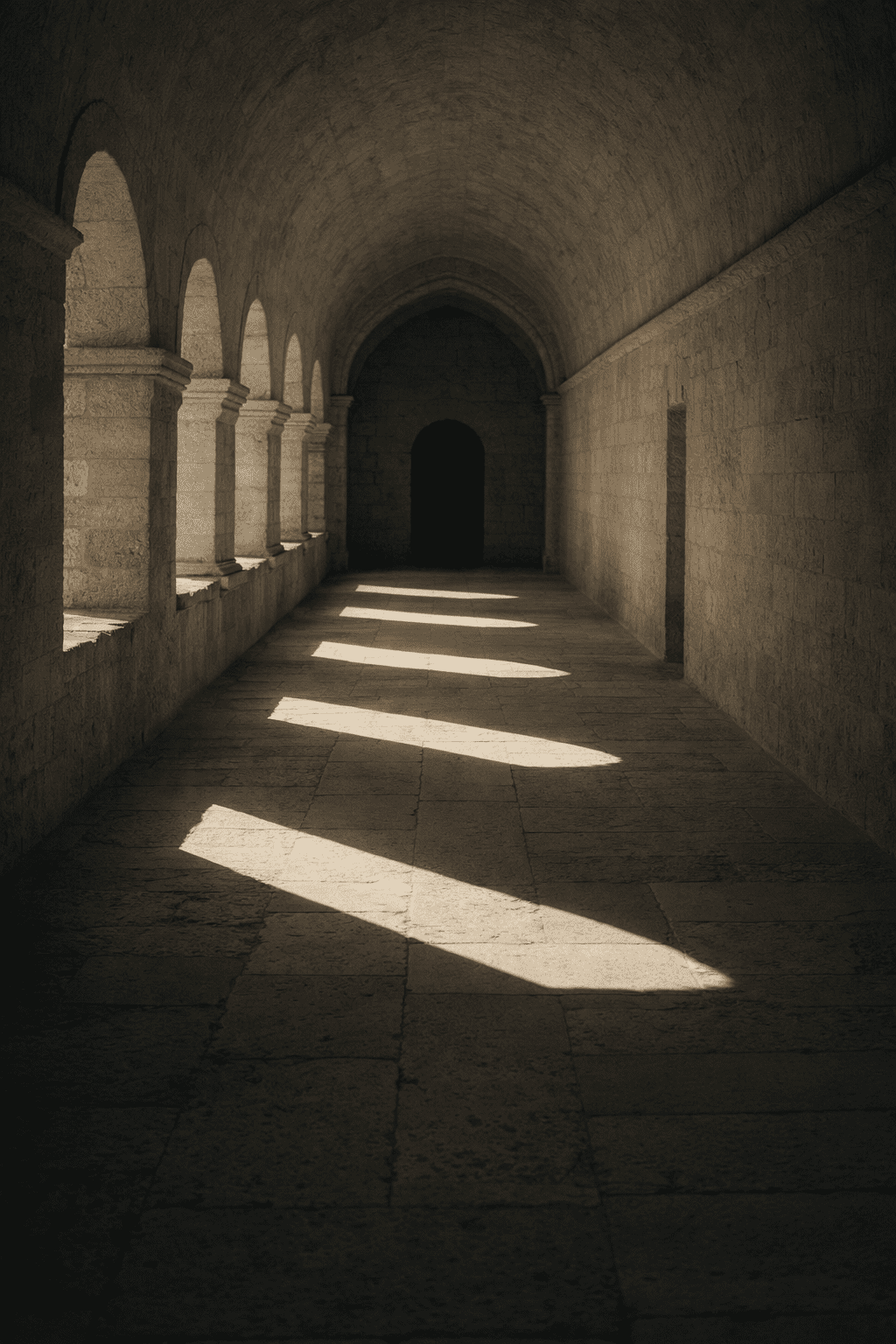
The Weight of Quiet: Finding the Architecture of Silence
The click of a heel on damp cobblestone usually signals the presence of a person, but in the early hours of a Venetian winter, it serves only to measure the vastness of the void. There is a specific quality to the air when a city stops performing for its inhabitants a heavy, velvet stillness that feels less like the absence of sound and more like the presence of an ancient, breathing entity. In that moment, the water doesn’t just lap against the stone; it speaks in a language of friction and gravity. This is not the silence of a vacuum, but the silence of a structure that has finally been allowed to settle.

We have largely forgotten how to inhabit such spaces. Modernity treats silence as a flaw in the system, a technical glitch to be patched with the white noise of productivity or the neon hum of digital distraction. We perceive the quiet as a terrifying emptiness, yet it is the very scaffolding upon which any meaningful aesthetic or philosophical experience is built. Without the pause, the note is merely a frequency; without the white space, the painting is a chaotic blur. We are losing our ability to perceive the edges of things because we have liquidated the silence that separates them.
The Tyranny of the Audible
The contemporary world is designed to be loud, not out of necessity, but as a mechanism of control. From the relentless notifications of our devices to the curated playlists that follow us from the supermarket to the gym, we are being fed a diet of constant auditory input. This is a form of sensory colonisation. When every moment is filled with sound, the internal dialogue that messy, unrefined, yet vital process of self-reflectionis effectively silenced. We have traded our private interiority for a public exteriority that demands our constant attention.
In our rush to eliminate boredom, we have also eliminated the state of receptivity. The Great Masters understood that beauty requires a degree of friction, a slowing down of the pulse. When we walk through a gallery with headphones on, we are not engaging with the art; we are merely observing it through a filter of our own choosing. We are refusing to let the work impose its own rhythm upon us. Silence is the price of admission for genuine insight, and currently, most of us are unwilling to pay it.
The Spatial Dimensions of Stillness
Architectural history is, in many ways, an attempt to house silence. Consider the soaring heights of a Gothic cathedral or the stark, minimalist lines of a Japanese tea house. These structures are not merely containers for people; they are vessels for a specific kind of atmosphere. They use stone, wood, and light to create a boundary between the chaos of the street and the clarity of the mind. How Architecture Teaches Us How to Feel explores how our physical environment dictates our emotional depth, and nowhere is this more evident than in the way we use space to negotiate quiet.
In the modern metropolis, however, silence has become a luxury commodity. We pay for noise-cancelling headphones, for soundproofed apartments, for “retreats” in the countryside. We have transformed a fundamental human right—the right to peace—into a status symbol. This creates a cultural divide where the wealthy can afford to think, while the rest are drowned out by the mechanical roar of the urban machine. The “smart city” is often the loudest city, vibrating with the invisible frequencies of data and the very visible exhaustion of its inhabitants.
The Aesthetics of the Unsaid
In literature and philosophy, what is left off the page is often more potent than what is written. The “subtext” is simply the silence between the words where the reader is invited to exist. When a writer explains too much, they are insulting the reader’s intelligence; they are filling the room with unnecessary furniture. The most enduring works of art are those that leave gaps—those that understand that the human imagination is most active when it has to bridge a chasm of ambiguity.
To appreciate the unsaid is to accept that not everything requires an immediate reaction. Our current “comment culture” demands that we have an opinion on everything, instantly. This is the antithesis of the contemplative life. Real intellectual confidence is the ability to sit with a thought without feeling the need to broadcast it. It is the recognition that some truths are only whispered, and if you are shouting, you will never hear them. We must learn to value the “negative space” of our lives as much as the “positive” acts of creation and consumption.
Why This Still Matters Now
We are standing at a threshold where our biological capacity for attention is being outpaced by our technological capacity for distraction. This is not a nostalgic plea for a pre-digital past, but a cold assessment of our present survival. If we lose the ability to sit in silence, we lose the ability to differentiate between what is urgent and what is important. The “noise” of the 21st century is designed to make everything feel urgent, thereby ensuring that nothing ever feels truly important.
The restoration of silence is a radical act of resistance. It is a refusal to be a mere data point in an attention economy. By reclaiming the quiet, we reclaim our agency. We allow our thoughts to settle, like silt in a glass of water, until the view becomes clear. This clarity is the only thing that will allow us to navigate the complexities of the coming decades with any degree of grace or wisdom. We do not need more information; we need more space to process what we already know.

The Return to the Self
Ultimately, the fear of silence is the fear of what we might find when the music stops. It is the fear of our own company. But there is a profound liberation in discovering that the quiet is not a vacuum. It is a fertile ground. In the stillness, the ego begins to dissolve, and we are left with a raw, unmediated experience of being alive. This is the “human” element that Mozartcultures seeks to celebrate the part of us that remains unchanged by the flickering lights of the digital age.
We must begin to cultivate “micro-silences” in our daily lives. This is not about meditation apps or scheduled “wellness” blocks; it is about choosing to leave the phone in the other room, choosing to walk without a podcast, choosing to let the evening settle without the television. It is about making room for the unexpected thought. (Moments That Changed History Happened in Quiet Rooms) touches upon the idea that the most profound shifts in history often began in moments of profound stillness. If we want to change the world, we might start by simply shutting up and listening to it.
“Silence is not the absence of sound, but the presence of self.”
“We are a civilization that has traded its depth for its volume.”


