Every few years, when the situation in Israel gets tense, Google searches for terms “Jerusalem” and “Israel” spikes. Especially as of this week, marked by forced evictions from East Jerusalem and celebrations around Jerusalem day, you can find the synopsis of the long conflict in Israel literally everywhere.
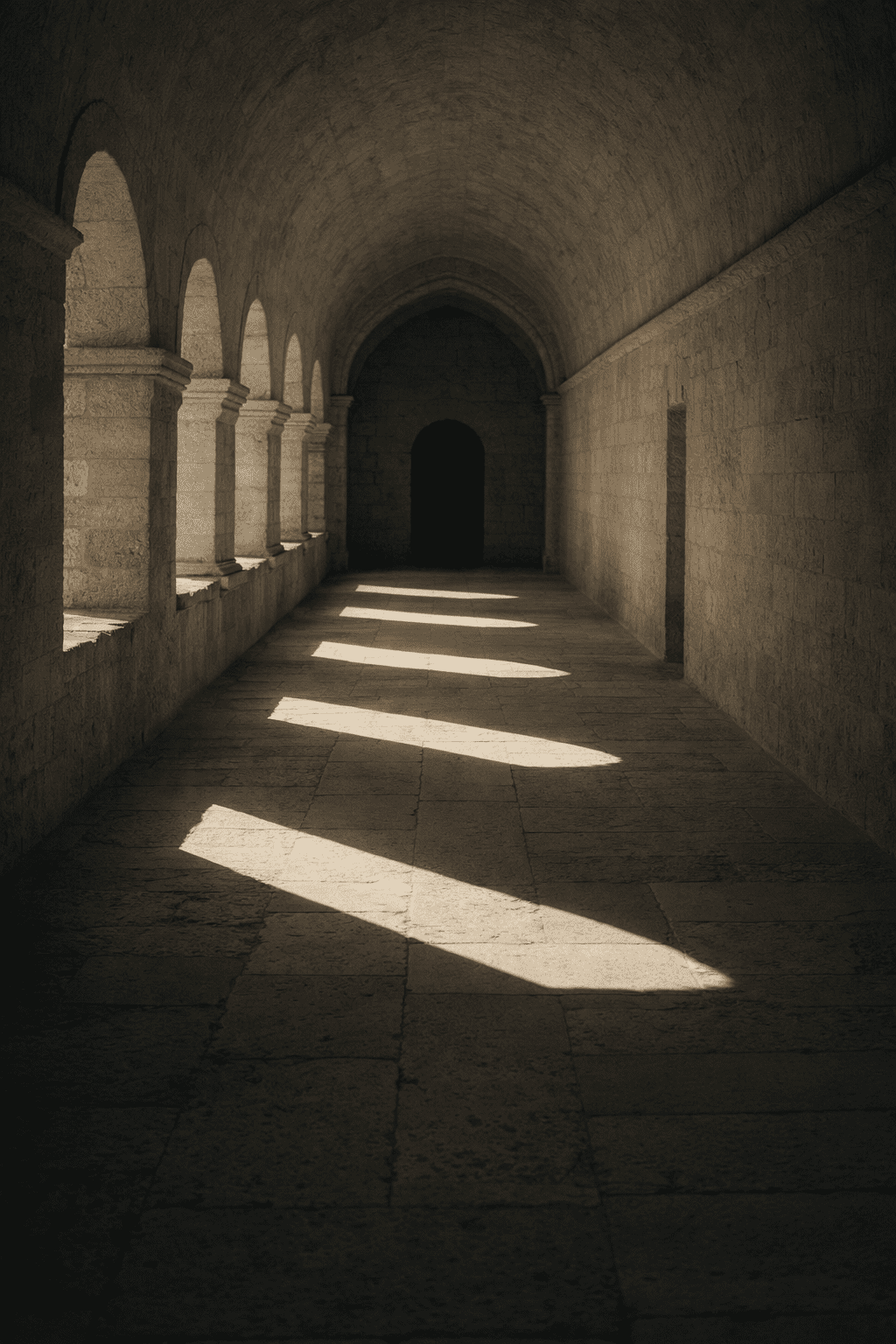
In the Old City of Jerusalem, besides the most important holy places, there is a building that sees all stages of Jerusalem’s history unraveled, and this is the Austrian Pilgrim Hospice in Jerusalem.
How It Started?
The history of the Austrian Pilgrim Hospice begins in 1827. After the defeat of the Ottoman Empire against the Allied forces from Britain, France, and Russia in the Battle of Navarino, the Treaty of London was signed in the same year. The Treaty marked an end to an 8-year war for the independence of Greece from the Ottoman Empire.
European countries’ interest in the Levant, and especially Jerusalem, is well documented and known since the Crusaders in the middle ages. The need to preserve pilgrimage sites important to Christians persisted throughout the centuries. The opportunity to establish some kind of control finally showed up in the middle of the 19th century.

Austro-Hungarian Influence
Austro-Hungarian consulate was established in Jerusalem in 1849, and in 1852 the then vice-consul proposed the construction of a pilgrimage hospital. The idea was to consolidate the Austro-Hungarian Empire as a protective force for the Christian population and pilgrims coming from the Monarchy. After time-consuming construction, the hospice opened to the public on the 19th of March 1863. To this day it remains the oldest national pilgrim house in the Holy Land. One of the most important days in the history of the Hospice was November 1869- visited by Emperor Franz Joseph I from the opening of the Suez Canal. This visit made him the first European monarch to visit the Holy Land since the end of the Crusader era.
During WWI
In 1902 the Hospice had 100 guest beds and expanded again when the construction of the sister’s house was completed in 1904. The Hospice went through a tense period during World War I, although no damage or change was done to the building itself. At that point, Jerusalem was part of the Ottoman Empire and was fighting on the same side as the Ottoman Empire, the Austro-Hungarian Empire, and Germany. This is why the Hospice became popular as the meeting point for the soldiers of these two armies. In November 1917 Jerusalem became the forefront for some of the battles. The Austrian consulate and its army were evacuated, but the personnel of the Hospice remained in the building to protect it from looting. After British forces took control of the city, the Hospice became an Anglican orphanage for Syrian Christian children.

Between Two Wars and During WWII
During the British mandate over Palestine, the hospice was returned to the Board of Trustees in 1919. This is the time when a new history of the Hospice starts, as it became a pension for British officers. Another change was the change in the Board of Trustees. Seats were added for the successors of the Austro – Hungarian empire, to Czechoslovakians, Hungarians, and Slovenians.
Since the end of WWI and until 1939, the Hospice was operating almost like a hotel. In 1937, 498 guests stayed one night in the hotel. After the Anschluss in 1938, and an initial unclear position, Hospice became an independent church institution. Since the Third Reich saw it as a convenient position in the Middle East, immediately after the declaration of war by Great Britain, the Hospice was taken over by the British military and turned into a prison camp.
Throughout WWII, even though the sisters of the convent oftentimes were moved to other convents, they were always present and continued to work in the Hospice, running the kitchen and household. On January 6th, 1948, the British left the control of Jerusalem to Israel, and the Hospice came under the control of the International Red Cross, so it worked as a military hospital.
Unknown Future for the Hospice
During the 1947-1949 Palestine war, the Hospice was used as a field hospital. As the peace between Transjordan and Israel came into effect, the Hospice came under the Transjordan protection. The sisters that were still in the Hospice were now working full-time as nurses. There were efforts to return the function of the Hospice to its original intent, but with the Six-Day War breaking out in 1967, another era of uncertainty began for Austrian Hospice in Jerusalem.
The 1980s and 1990s marked a more clear path for the Hospice. Even after the war in Iraq in 1991, and Second Intifada from 2000 to 2005 which decimated the occupancy rate, the Hospice was still working. It is important to highlight that this entire time, the official owner of the Hospice is the Archdiocese of Vienna. To maintain the ownership and that the hotel continues to work, the Archdiocese even sold some of its artwork. Along with changes of the staff, and Rectors the 2010s marked the return of Hospice to its original use – pension site or hotel. Since 2018, the Austrian Hospice in Jerusalem is officially called “Austrian’s Pilgrims Hospice to the Holy Family in Jerusalem”.
Hospice Today
Since 2019, in the gardens of the Hospice, you can enjoy traditional Viennese food and sweets – Wiener Schnitzel, Sachertorte, and even Apfelstrudel. The Cafe is called Cafe Trieste, and the name is not a coincidence. The city of Trieste was part of the Austro-Hungarian Empire until its dissolution, and it was also an important port where the pilgrimage to the Holy Land would begin for the Empire’s citizens.
 Caffe Trieste inside the Hospice, 2015, Markek (3)
Today the Hospice works as a hotel with dormitories and guest rooms, it still serves mass in the Chapel, and performs social responsibility by creating jobs, and supporting children in need and their families through training and education. More importantly, the Hospice is a cultural, and educational institution and serves as an intercultural encounter between Christianity, Judaism and Islam with exhibitions, lectures, and concerts organized on its grounds.
The Austrian Pilgrim’s Hospice to the Holy Family in Jerusalem, following its long history amidst all the turmoil, shows us that if you have a goal and purpose, together with a little patience, eventually you will come back to your path. The story of the Pilgrim’s Hospice is fascinating, because the idea for Hospice came from a politically tense situation with the aim for one country to assume power in the area, and today, it is working as a hotel, chapel, and meeting point of cultures, while at the same time offering support for the communities around it.
References
Austrian Pilgrim Hospice to the Holy Family. (2021, March 25). In Wikipedia. https://en.wikipedia.org/wiki/Austrian_Pilgrim_Hospice_to_the_Holy_Family
Helmut Wohnout: Das Österreichische Hospiz in Jerusalem. 1st Edition. Böhlau Verlag, Vienna 2000, ISBN 3-205-99095-1, p. 105–122.
Namensänderung für Österreichisches Hospiz in Jerusalem. (2018, July 6). Katolische Kirche Erzdiözese Wien. https://www.erzdioezese-wien.at/site/home/nachrichten/article/66786.html
Das Österreichische Hospiz in Jerusalem: ein gemütliches Geisterhaus. (2018, May 11). Joe Kirchengast. https://joekirchengast.wordpress.com/2018/05/11/das-oesterreichische-hospiz-in-jerusalem-ein-gemuetliches-geisterhaus/
Photo references:
Feature photo – Jerusalem Oesterreichisches Hospiz BW 3. (2010). [Photograph]. https://commons.wikimedia.org/wiki/File:Jerusalem_Oesterreichisches_Hospiz_BW_3.JPG
Photos from the article:
(1) Jerusalem, On the grounds of Hospice1 (2015). Markek, P., https://mozartcultures.com/en/wp-content/uploads/2021/05/WhatsApp-Image-2021-05-16-at-21.55.44-1-1.jpeg
(2) Jerusalem, On the grounds of Hospice2 (2015). Markek, P., https://mozartcultures.com/en/wp-content/uploads/2021/05/WhatsApp-Image-2021-05-16-at-21.55.44-2.jpeg
(3) Jerusalem, Caffe Trieste in Hospice (2015). Markek, P., https://mozartcultures.com/en/wp-content/uploads/2021/05/WhatsApp-Image-2021-05-16-at-21.55.45-1.jpeg