Looking for the most aesthetic photo spots in Rome?
This guide maps 10 cinematic locations from St. Peter’s framed through the Aventine Keyhole to the fairy-tale façades of Quartiere Coppedè with the exact hour to shoot and where to stand.
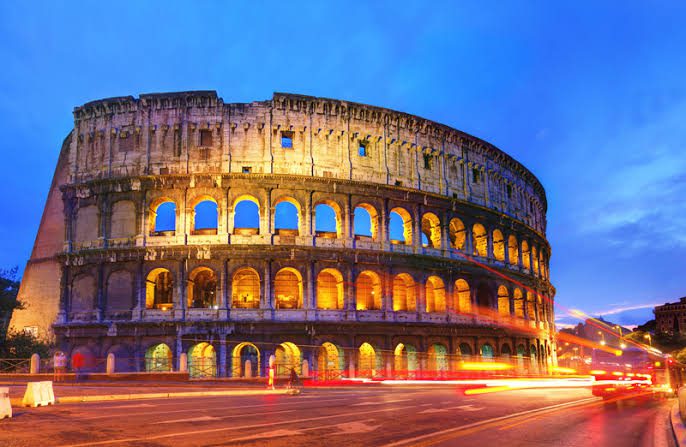
Rome’s best frames are not always at the Colosseum queue. More often, they are one street behind it.
This guide is part of our Aesthetic Europe Travel Series — a collection of practical city maps, photography routes and carefully selected European travel guides.
Rome does not do subtle. It stacks twenty-seven centuries on top of each other and dares you to find an angle.
The real trick is timing.
This city belongs to whoever wakes up first. Every location below includes its golden window, because in Rome, the difference between a snapshot and a photograph is often ninety minutes of sleep.
1. The Aventine Keyhole — A Basilica Through a Door Photo Spots in Rome
On quiet Aventine Hill, the green door of the Knights of Malta priory hides the most famous keyhole in the world.
Peer through it and St. Peter’s dome appears perfectly framed at the end of a garden tunnel.
By mid-morning, there is usually a queue. At 7 AM, there is often just you, the door and the shot.
Best time: 6:30–8:00 AM
Shot to get: Press your phone lens close to the keyhole and center the dome. Then step back to photograph the green door and its worn brass plate.
2. Giardino degli Aranci — The Orange Garden Terrace
Two minutes from the keyhole, the Orange Garden opens onto a terrace where Rome unfolds below you — domes, rooftops and the bend of the Tiber.
Umbrella pines frame the skyline like a stage curtain, while the orange trees add colour and texture during winter.
Best time: Sunrise, or golden hour if you do not mind sharing the terrace.
Shot to get: Frame the panorama through the pine canopy, or photograph a portrait against the stone balustrade with the city softened behind.
3. Piazza Navona at Dawn — Baroque With No One in It
At 6:30 AM, Rome’s grandest Baroque piazza runs its fountains for an audience of pigeons, delivery workers and one local carrying an espresso.
Bernini’s Fountain of the Four Rivers, normally surrounded by visitors, becomes a private sculpture garden.
This is one of the highest reward-to-alarm-clock ratios in the city.
Best time: First light until 8:00 AM
Shot to get: Photograph the full piazza from its southern end. After rain or early-morning cleaning, the cobblestones may reflect the church façade and fountains.
Stop Screenshotting. Start Navigating.
The Aventine Keyhole, Orange Garden and Piazza Navona can all fit into one carefully planned morning.
The Rome in 48 Hours Guide + Interactive Map includes:
- 40+ pinned Rome locations
- Exact photography times
- Walking routes organised by neighbourhood
- Trattorias and coffee stops near every location
- A Google Maps layer that opens directly on your phone
Get the Rome Guide and Map →
4. The Pantheon Oculus at Noon — Rome’s Original Spotlight
Nearly two thousand years ago, Roman engineers built a nine-metre opening into the Pantheon’s concrete dome.
It still performs every day.
Around midday, the oculus sends a hard column of light onto the marble interior, turning visitors into moving silhouettes.
Reserve your timed entry, position yourself opposite the beam and wait for someone to walk through it.
Best time: 12:00–1:00 PM on a clear day
Special date: On April 21, the traditional date of Rome’s foundation, the sunlight reaches the entrance area in a particularly symbolic alignment.
Shot to get: A single figure crossing the light beam, or a straight-up composition of the oculus surrounded by the coffered dome.
For the Vatican Museums, Colosseum, Borghese Gallery and other timed attractions, you can browse Rome tickets and skip-the-line experiences through GetYourGuide.
Use code MOZARTCULTURESTR5 for an extra 5% discount on eligible bookings.
5. Via Margutta — The Ivy Street of Artists
Fellini lived here. Roman Holiday was filmed here. The street still keeps its agreement with beauty.
Via Margutta is filled with ivy-covered façades, sculpture studios, small courtyards and marble fountains — only one block away from the chaos of the Spanish Steps.
It is one of the easiest “secret Rome” photographs in the city.
No climb. No ticket. No long queue.
Best time: Mid-morning, when soft light enters the narrow street.
Shot to get: The ivy façade around No. 51, followed by close-up frames of studio windows, courtyards and historic doorways.
6. Quartiere Coppedè — Rome’s Fairy-Tale District
Nothing prepares you for Quartiere Coppedè.
Walk beneath the monumental arch and hanging iron chandelier on Via Tagliamento, and the city suddenly changes character.
The district is a 1920s architectural fever dream filled with Art Nouveau towers, Baroque references, gilded sundials, animal sculptures and villas that look borrowed from a storybook.
Many Rome visitors never reach it.
Best time: Late afternoon, when low sunlight warms the mosaics and façades.
Shot to get: The entrance arch with the chandelier centred above the street, followed by the Fountain of the Frogs with the Fairy Villas behind it.
Only Have 48 Hours in Rome?
Rome punishes bad planning more than almost any other European city. One poorly timed queue can consume your best light.
The Rome in 48 Hours Guide turns this article into an hour-by-hour route:
- Aventine Keyhole at dawn
- Pantheon oculus around noon
- Quartiere Coppedè before sunset
- Ponte Sant’Angelo during blue hour
- Food and coffee stops within walking distance
Download the Rome itinerary and map →
7. Fontana dell’Acqua Paola — The Gianicolo’s Marble Balcony
High on Gianicolo Hill, the monumental white fountain featured in La Grande Bellezza overlooks one of Rome’s best free panoramas.
Unlike many central viewpoints, the Fontanone often remains relatively calm around sunset. After dark, the illuminated fountain becomes a cinematic set piece of its own.
Best time: Golden hour through blue hour
Shot to get: Frame the skyline between the fountain’s columns, then photograph the illuminated marble against the deep-blue evening sky.
8. Sant’Ignazio — The Ceiling That Is Not There
The Church of Sant’Ignazio could not complete the grand dome originally planned for the building.
Instead, Andrea Pozzo painted one.
Created in the seventeenth century, the trompe-l’œil dome is so convincing from the correct viewpoint that many visitors struggle to identify where the architecture ends and the illusion begins.
The church also contains a tilted mirror that makes photographing the vast ceiling easier.
Best time: Late morning, when the interior light is more even.
Shot to get: Stand on the marked floor point for the false dome, then use the mirror to photograph the full nave ceiling without lying on the marble floor.
9. Trastevere’s Back Lanes — Ochre, Ivy and Laundry Lines
Skip Trastevere’s most crowded streets and turn into Vicolo del Cedro, Via della Paglia and the lanes climbing towards Gianicolo.
This is Rome’s texture at its densest:
- Burnt-orange walls
- Green shutters
- Hand-painted trattoria signs
- Vines spilling over doorways
- Laundry lines suspended between old buildings
- Vespas parked beneath faded façades
Best time: Weekday mornings before lunch service, or lantern-lit evenings for a moodier frame.
Shot to get: Look for one ochre façade with green shutters and a Vespa parked below — the photograph that communicates Rome without needing a landmark.
10. Ponte Sant’Angelo at Blue Hour — Angels Against the Sky
Bernini’s angels line the pedestrian bridge leading to Castel Sant’Angelo.
For roughly twenty minutes after sunset, the statues become silhouettes against a violet-blue sky while the dome of St. Peter’s glows downstream.
It is one of the most cinematic ways to end a day in Rome.
Best time: 20–40 minutes after sunset
Shot to get: Place one angel statue in the foreground with St. Peter’s softly visible behind it. For another angle, walk down to the riverbank and photograph the castle’s reflection in the Tiber.
How to Route These Rome Photo Spots in Two Days
Day 1: Aventine and Historic Centre
Start with the Aventine Keyhole and Orange Garden at sunrise.
Continue towards Piazza Navona and the Pantheon during the morning, explore Via Margutta around mid-morning or early afternoon, and finish at Ponte Sant’Angelo during blue hour.
Suggested order:
- Aventine Keyhole
- Giardino degli Aranci
- Piazza Navona
- Pantheon
- Via Margutta
- Ponte Sant’Angelo
Day 2: Trastevere, Gianicolo and Coppedè
Begin in Trastevere before its restaurants and bars become busy.
Climb towards Fontana dell’Acqua Paola, return to the centre for Sant’Ignazio, then travel north-east for Quartiere Coppedè during late-afternoon light.
Suggested order:
- Trastevere back lanes
- Fontana dell’Acqua Paola
- Sant’Ignazio
- Quartiere Coppedè
The full sequencing, walking routes and nearby food stops are included in the Rome in 48 Hours Guide + Interactive Map.
Book Your Rome Essentials
Find Flights to Rome
Compare flight dates and prices before deciding whether to fly into Fiumicino or Ciampino.
Search Rome flights on Skyscanner →
Where to Stay in Rome
For first-time visitors, Monti offers convenient access to the historic centre, while Trastevere provides a more atmospheric evening experience.
The Aventine is quieter and works especially well for travellers who want to photograph the keyhole and Orange Garden at dawn.
Compare Rome hotels on Booking.com →
Book Rome Tickets and Experiences
The Vatican Museums, Colosseum and Borghese Gallery use timed-entry systems and can sell out during busy periods.
Browse available tickets, tours and skip-the-line experiences through GetYourGuide.
Use code MOZARTCULTURESTR5 for an extra 5% discount on eligible bookings.
Stay Connected in Italy
An eSIM lets you use Google Maps, booking confirmations and transport apps immediately after landing.
Get an Italy eSIM with iroamly →
Continue Exploring Europe
Rome is only one part of the route.
Our 22-Country Europe Travel Guide brings together practical planning information for travelling across Europe, including:
- Country-by-country travel information
- Transportation guidance
- Budget planning
- Route suggestions
- Accommodation strategies
- Booking resources
- Digital travel tools
- Curated recommendations
Explore the 22-Country Europe Travel Guide →
FAQ: Aesthetic Photo Spots in Rome
What is the most Instagrammable place in Rome?
The Aventine Keyhole is one of Rome’s most distinctive compositions because it frames St. Peter’s dome through a small priory door.
Visit before 8:00 AM for the best chance of avoiding a queue.
For unusual architecture, Quartiere Coppedè delivers fairy-tale façades that many visitors to Rome never see.
What is the best time to take photographs in Rome?
Dawn until approximately 8:30 AM offers the best combination of empty piazzas, softer light and fewer tour groups.
The hour before sunset warms Rome’s stone and ochre façades, making it ideal for Gianicolo, Trastevere and Quartiere Coppedè.
Midday is generally more difficult, with one major exception: the Pantheon’s oculus light beam.
Are there hidden Rome photo locations away from tourists?
Yes.
Quartiere Coppedè, Via Margutta, Fontana dell’Acqua Paola and Trastevere’s upper lanes are all close enough to combine with famous sights but generally receive fewer visitors than the Colosseum, Trevi Fountain and Spanish Steps.
Do I need to book Rome attractions in advance?
For the Vatican Museums, Colosseum and Borghese Gallery, advance booking is strongly recommended.
Early timed-entry slots are especially valuable for photographers because they preserve the morning light and reduce the risk of losing several hours in a queue.
You can check current Rome ticket availability through GetYourGuide and use code MOZARTCULTURESTR5 for an extra 5% discount on eligible bookings.
Is the Rome travel map available on Google Maps?
The Rome in 48 Hours Guide + Interactive Map includes pre-pinned locations that can be opened on your phone, helping you connect viewpoints, photography locations, restaurants and attractions without manually saving every address.
Affiliate disclosure: Some links in this article are affiliate links. If you make a booking or purchase through them, we may earn a commission at no additional cost to you. These commissions help us create and update independent travel guides.