Have you ever wondered what it would feel like experiencing the fantastic world of fiestas and siestas as well as a huge amount of fun and diversion along the Costa de la Luz while grabbing a bite to eat some jamón ibérico, a very famous type of Spanish dry-cured ham (Carrapiso et al., 2003). ? If your answer is yes, then let me take you on a little trip in this small but glorious southwestern city in the region of Andalusia, Spain: Huelva.

Having always been a prominent destination for residence, hence a melting pot of civilizations; Huelva once was home to Western Phoenicians, a Roman colony, and much later Moors reigned over the area for hundreds of years -which obviously affected the Spanish lifestyle in drastic ways, particularly in terms of culture and language. Finally, the city was taken back by Alfonso X in the name of Christians in 1257 (Britannica, n.d.).

Just two more historical facts about Huelva for history nerds before proceeding to the more way more fun and exciting stuff (even though I myself do find those facts quite thrilling as well): Huelva is largely known for having been the place where Christopher Columbus took up residence right before his voyage to the Americas, besides having the oldest football club of Spain named Recreativo de Huelva. Sounds cool, right? Alright, I guess that is enough background information. Let’s jump to the section where I will try to share with you folks some useful stuff about modern-day Huelva.
If you want to include Huelva on your trip, I think it is helpful to know that the city itself does not have an airport and the closest airport is in the city of Sevilla, which is the beautiful capital of Andalusia more or less 90 kilometres away from Huelva. You might as well also take a bus from Madrid to Huelva, which lasts around 8 hours and is definitely a low-cost way of traveling. There are a daily trains from Madrid and Barcelona to Huelva as well; obviously they work wonders if you want to save on time, however traveling by train would be more expensive compared to taking a bus.
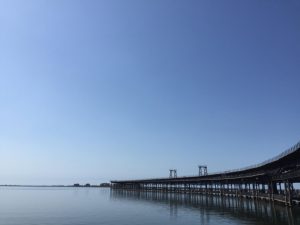
Welcome to Huelva regardless of how you did make it to here: the city of flamenco, happy people, lazy afternoon naps, cute chihuahuas, tinto de verano, nice and chill beach days and much more… Even though the city has a pretty decent public transport system for a small city, you can walk around the city without having to use public transport that often (unless you are eager to visit towns of Huelva of course). Muelle de Riotinto is one of those places everyone gets to see once they set foot in the city. You can have a glass of wine or beer whilst watching the marvelous sunset under the shadow of the bridge. Plaza de las Monjas (lit. The Nuns’ Square) is probably the most popular meeting popular in the city center where you can find lots of restaurants, cafes and shops to walk through. La Merced is the area with Cathedral de Merced and one campus of University of Huelva, another usual meeting point for people. Do not forget to visit Saxo for a quick drink there!

You should not leave Huelva without tasting its famous jamón ibérico (Iberian ham I was talking about earlier, remember?), churros, tinto de verano (a refreshing drink made up of red wine and lemonade), sangría (another coctail with several ingredients), fresh seafood (if you are a fan of them anyway) and tapas (Spanish appetizers in small portions). Even though some of these yummies are not only found in Huelva but also all over Spain, sounds great being able to enjoy them the way Onubenses (modern-day peopel from Huelva) do, doesn’t it?

Huelva has so many small towns, each of which offers you unique experiences. It goes without saying that you should spare at least a day for a great period of relaxation and peace on the beach. Punta Umbría, Matalascañas, El Rompido, Mazagón or some other great options you got over there… Good luck choosing one! You might also want to visit Columbus’ ships in Museo de las Carabelas in Palos de la Frontera, go visit Doñana National Park, or practice kitesurfing along the coast.
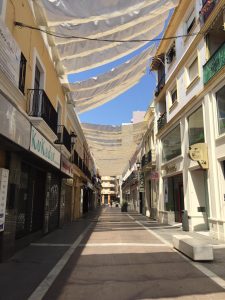
I hope I have been able to introduce you to some of the underrated gems of the southern Spain through this article. Here you can find some of the photos I took also. I am looking forward to your comments and photos if you ever end up in Huelva one day mesmerized with all the unique beauty and friendliness spread around by Onubenses. Thank you for bearing with me up until here; be good to yourselves, treat yourselves with a drink of your choice, and let the wanderlust surround you! Adios muchachos!

References
Carrapiso, A. I., Bonilla, F., & Garcı́a, C. (2003). Effect of crossbreeding and rearing system on sensory characteristics of Iberian ham. Meat science, 65(1), 623-629.
Tikkanen, A. (Ed.). (n.d.). Huelva. Retrieved March 18, 2021, from https://www.britannica.com/place/Huelva-Spain