“What is that?”
“How much did you pay for it?”
“Is it permanent?”
“You know it’s permanent?”
“It’s going to look ugly when you’re old.”
These are probably the most common statements and questions people ask when they see someone with a tattoo. It might look alluring, it might look awful. It might be disgusting, or it might be inviting you to get one yourself. Whatever it is, it might be helpful to know what tattooing is as a process and how it began, so that all would have a better understanding of it before making any kind of haste decisions.
Tattooing is one of the oldest art forms known to human. It is a type of body modification that involves creating permanent letters, symbols or other images on the skin. Ink is injected under the surface of the skin, by piercing it with a small needle.
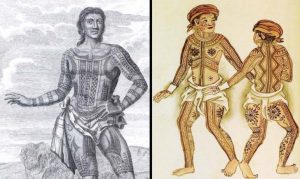
In ancient times, tattoos were not only applied for decoration, but they were also held symbolic significance as well. Today when you see someone with a tattoo or even multiple tattoos, it is nothing uncommon, but 70, 60 or even 30 years ago, tattoos were considered for rebels or even for criminals. Images range from simple flowers and cartoon characters, to more portraits and scenery. While not every tattoo has a deep meaning, most tattoos still signify something. A few decades ago, they were automatically associated with something bad. Bad people, bad company, bad behaviour. In Christianity, one of the most widespread religions in the world, tattoos are looked at as something sinful, as the Old Testament states: “You shall not make any cuts in your body for the dead.” Many Christian families understood that as not to make any changes to the body, other than the one God has given them, and hence when tattooing was introduced to us from Asia, America and Africa, people were widely against it, so much, so that tattooing became increasingly associated with paganism and the criminal class, and was prohibited in Europe under the first Christian Roman emperor, Constantine. Some tattoos were applied because they had religious meaning while others were status symbols. At a few points in history, tattoos were even used to mark slaves, as well as prisoners and other criminals.
But as time flew by tattooing actually became more and more popular. In the late eighteenth century, the practice of tattooing became popular among British sailors around the time of Captain James Cook’s voyages to Tahiti, and for a time, tattoos were present in the western world mostly on the bodies of seamen returning from the South Pacific. But the art form experienced a resurgence among the British gentry after King George V and later Edward VII were tattooed (with a dragon and a cross, respectively), and foreign courts followed the British Court’s lead, sparking a rash of tattooed royalty during the nineteenth century. According to Nina Jablonski, author of Skin: A Natural History, “tattoos become more socially acceptable because they are visibly sported by people who are themselves socially accepted.”

Tattoos have long been used as a means of identification: The Romans tattooed their criminals and slaves, a practice that was adopted by the Japanese in the early 17th century, and the Nazis tattooed numbers on the arms of Jews during the Holocaust to dehumanise concentration camp inmatesand identify their corpses. Despite these grim uses, people today primarily use tattoos to tell their personal stories, as talismans, or to memorialise a loved one. “Their permanence is their allure” (Jablonski, 2013).
Whether or not you look at tattooing as something symbolical or fashionable, whether you would do it yourself or not, you can not deny it is a big part of todays world culture. Some believes give them certain abilities, to others they’re a memorable of someone important. Whether we like it or not, we are all due to respect other people beliefs and choices.
If you find this article interesting, we would recommend you to read another article on our website titled Behind the needle – Tattooing 101, where we interviewed 2 amazing tattoo artists from Belgrade, Serbia and went in depth of what it’s like to be a tattoo artist and what you should know if you decide to decorate yourself with one amazing piece of art.
Resources:
Jablonski, N. G. (2013). Skin: A Natural History (First Edition, With a New Preface ed.). University of California Press.
Probing Question: What is the history of tattooing? | Penn State University. (2008, June 20). Penn State News. https://news.psu.edu/story/141345/2008/06/20/research/probing-question-what-history-tattooing
What is Tattooing? (n.d.). SUEDE_INK_STUDIOS. Retrieved May 23, 2021, from https://www.suedeinkstudios.com/projects